

A recent DNA analysis of communal medieval burials has revealed a surprising secret of early Christians, which has fundamentally altered archaeologists’ understanding of family ties at that time.
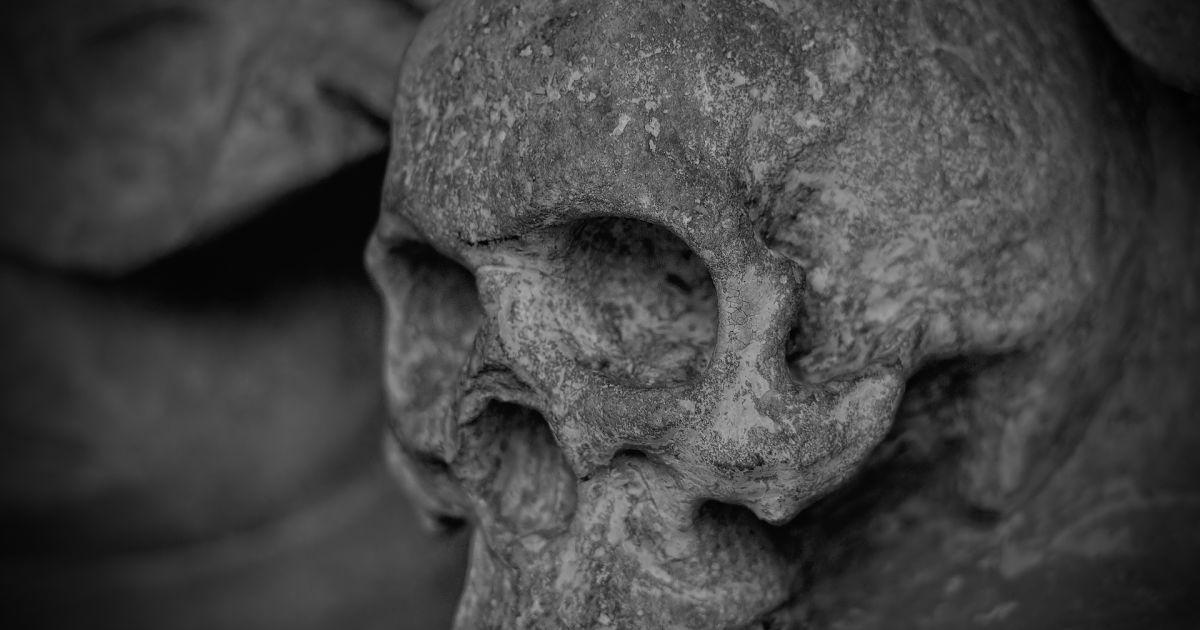
Early Christians buried their children with non-biological relatives / © Pexels
Swedish scientists from Stockholm University conducted a large-scale DNA analysis of 142 skeletons from three local medieval cemeteries (10th-14th centuries). The researchers discovered an unexpected pattern: in communal graves of children and infants, they were mass-buried alongside adults with whom they had no familial connection.
This is reported by Live Science.
Unexpected DNA Analysis Results
Most communal burials consisted of adults and children of the same sex: women were buried with girls, and men with boys. Previously, historians and archaeologists were convinced that parents and their descendants were invariably interred in such shared graves. However, genetic tests completely disproved this long-standing hypothesis.
“We often assume that adults and children sharing a grave were parents and children or other close relatives. In most cases, this turned out not to be true,” said lead author of the study, Maja Kreszwinska.
Scientists suggest that such unusual burials are linked to the spread of Christianity in Scandinavia at the end of the 10th century. At that time, rules became stricter: unbaptized infants were forbidden from being buried in consecrated cemetery ground. Therefore, grieving relatives might have secretly placed deceased infants in the graves of other adults to circumvent strict religious norms.
The Role of Social Ties and the Story of “Lady 56”
Another reason for communal burials could have been harsh climatic conditions or the structure of society at the time. People might have been buried together in the spring if they died in winter when the frozen ground made it impossible to dig separate graves. Furthermore, medieval households often included not only blood relatives but also servants, workers, and even enslaved individuals.
Despite the lack of familial ties in shared graves, scientists found evidence that some influential families buried their relatives in the same cemetery for several generations. In particular, archaeologists studied the remains of a Christian pilgrim known as “Lady 56,” who died at the age of about 30. She was buried with a rare scallop shell, which the woman received after a pilgrimage to the Spanish city of Santiago de Compostela.
“Ancient DNA analysis has finally given us the tool we’ve been waiting for to directly test these interpretations,” emphasized co-author of the study, Anna Kjellstrom.
Genetic analysis proved that “Lady 56’s” parents, brother, and daughters were also buried in the same Vesterhus cemetery, but in completely different locations. This confirms that for medieval people, belonging to the local Christian community could be as important as blood kinship.
In related news, a unique archaeological find has forced scientists to drastically revise their understanding of the cruelty of the Ice Age and revealed a deeply hidden emotional aspect of our ancient ancestors’ lives. In an Italian cave, scientists found evidence that humans mourned their deceased as far back as 27,000 years ago.
Comments Sort: New Old Popular Submit