

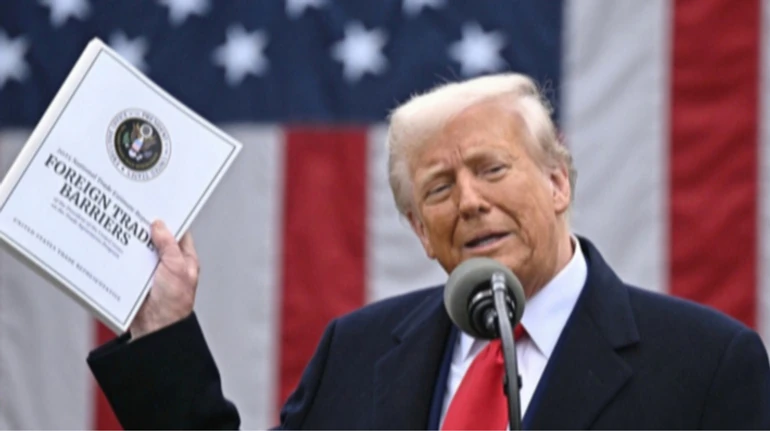
 Trump’s original method to continue his global tariffs despite losing court case Link copied
The Trump administration on Friday imposed new tariffs of 10% and 12.5% on goods from 60 trading partners, including Europe and China, citing “accusations of insufficient adherence to the ban on forced labor,” precisely as the temporary global 10% tariff expired.
This is reported by Reuters.
This move represents the White House’s latest attempt to revive President Donald Trump’s plan to implement near-global tariffs.
This occurred after the U.S. Supreme Court in February overturned his “reciprocal” tariffs ranging from 10% to 50%, imposed based on an emergency law aimed at reducing the U.S. trade deficit.
The imposition of new tariffs was anticipated, but trading partners worldwide unanimously contested the justification for such measures.
The new tariffs, announced in a notice in the “Federal Register,” cover 99.4% of U.S. imports but include numerous exceptions for goods such as oil and gas, fertilizers, and certain food products.
“The United States has had a ban on the import of goods produced using forced labor for nearly a century and enforces it strictly. It is high time for our trading partners to do the same,” stated U.S. Trade Representative Jamieson Greer in a press release.
Imposed under Section 301 of the Trade Act of 1974, the new tariffs allow the administration to maintain a minimal tariff level on virtually all U.S. imports, despite the setback in the Supreme Court.
These tariffs are also likely to carry a lower legal risk, as Section 301 has withstood previous legal challenges.
Trump’s temporary global 10% tariff expired at 00:01 EST on Friday (04:01 GMT) after being in effect for 150 days.
The new tariffs took effect precisely at that moment, with goods in transit exempt from duties until 00:01 EST on July 28.
The United States imposed a 10% tariff on goods from Argentina, Bangladesh, Great Britain, Cambodia, Canada, Ecuador, El Salvador, Guatemala, Honduras, India, Indonesia, Jordan, Malaysia, Mexico, Pakistan, Sri Lanka, Trinidad and Tobago, the EU, Taiwan, Japan, South Korea, and Switzerland.
For these, rates were established that, combined with previously existing most-favored-nation tariff rates, amounted to 10% or 12.5%.
Another 38 countries were set at a 12.5% rate. Among them is Vietnam, which issued a new decree this week establishing more detailed regulations regarding the prohibition of importing goods made with forced labor.
Also included is China, which the United States accuses of detaining members of the Uyghur minority in labor camps, a claim Beijing denies.
Recall:
U.S. President Donald Trump imposed a 50% tariff on certain categories of goods imported from Canada.
The cost of maritime shipping rose to its highest level since the Red Sea crisis in 2024, as businesses rushed to stockpile ahead of new U.S. tariffs.
In late April, pro-tariff groups and human rights organizations appealed to the administration of U.S. President Donald Trump to introduce new quotas, tariffs, and import bans due to the use of forced labor.
За матеріалами: epravda.com.ua