
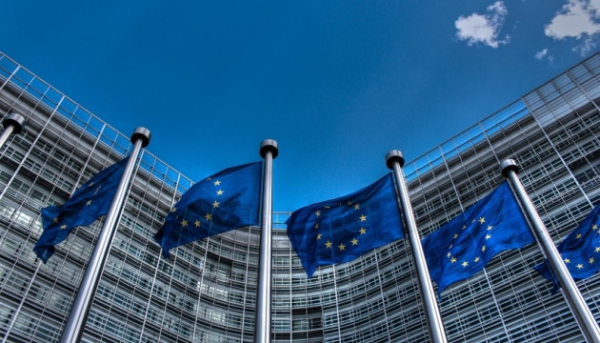
The European Union confirms unity, but the price of consensus is rising.
The European Union has finally officially adopted the 21st package of sanctions against the aggressor state, Russia. Long-awaited unanimity has been reached on the price cap for Russian oil, the path to a real EU entry ban for Russian military personnel is gradually being paved, a record 218 individuals and entities have been added to the sanctions list, the noose around the neck of the Russian banking and crypto sectors, and Russia’s shadow fleet is tightening even more. At the same time, none of the above would have been possible without a series of consensuses with several member states that stood firm, opposing certain points of the package that were included in the initial proposal put forward by the European Commission.
Greece ultimately won the battle to exclude maritime carriers from the sanctions regime for the transportation of Russian LNG to third countries. Bulgaria lifted its “veto” only after the name of Russian Patriarch Kirill was removed from the sanctions list. Austria persuaded the EU to consider in the coming months how Raiffeisen Bank can receive compensation for losses incurred by the institution after exiting Russia. France and Italy seem to have bought some time on the issue of banning entry for former Russian combatants, as member states today only agreed to work on how this restriction will be implemented in practice.
Three senior EU officials, authorized to speak on condition of anonymity about the technical details of the discussions preceding the official approval of the package, shared some details of the intensive preparation of new economic restrictions against the Russian aggressor with Ukrinform.
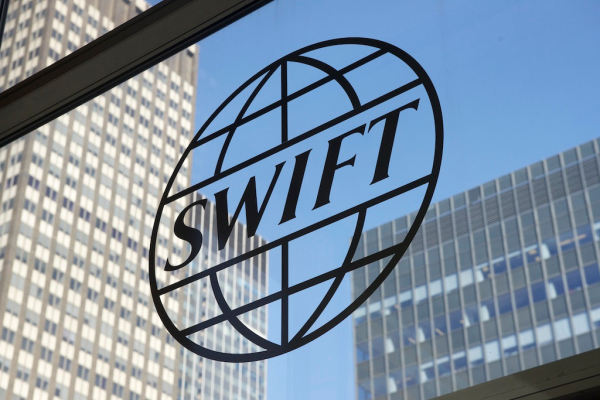
FURTHER DISCONNECTION FROM SWIFT, BLOW TO CRYPTO PLATFORMS
One of the main directions of the sanctions package was Russia’s financial sector, as the European Commission estimates that the current restrictions imposed on it have a “very good effect”.
The package provides for a ban on transactions and disconnection from the SWIFT system for 33 Russian banks, including large regional banks that have taken over many functions from already sanctioned Moscow banking institutions.
A total of 94 Russian banks are now subject to a full blocking under the new package, which also means asset freezes. “As a result of today’s full asset freeze and transaction ban, the measures will cover approximately 50 percent of Russia’s entire banking sector. This is 50 percent by number of banks alone, but if you look at revenue, assets, and transaction volume, it will be more than half, including the absolute majority of Russia’s so-called systemically important banks,” said a senior EU official. “Banks are extremely important not only from a macroeconomic point of view but also from a microeconomic one, as they are ultimately key intermediaries in any supply chain on which the Russian military machine depends. They are a critically vulnerable link, so we expect that, like our previous sanctions against banks, these sanctions will have a significant impact on the military machine,” he added.
The EU is also targeting the banking sector of third countries that have facilitated sanctions circumvention by Russia. This time, it concerns a bank based in Mongolia and two subsidiaries of Russian banks in India (Sberbank and VTB).
Separately, the EU has sanctioned a Kyrgyz bank that still uses the Russian MIR card system.
One official stated that the further addition of banks in third countries to the list is contributing to the start of a substantive discussion with some of them, as the banks and authorities themselves are approaching the EU, sometimes even before sanctions are imposed, to correct mistakes and disconnect from Russian systems. This happened with one Azerbaijani bank.
Another area where the EU has strengthened restrictive measures is cryptocurrency services. The package targets 14 platforms in third countries, including Georgia, Panama, the Marshall Islands, Belarus, the UAE, and Nigeria. They are believed to be linked to the A7 network, which has already been subject to sanctions.
The EU has also provided for the possibility of completely prohibiting third countries from cooperating with any cryptocurrency operator platforms, which should serve as a deterrent against possible cooperation with Russia-friendly operators.
Regarding transport infrastructure, the EU is imposing sanctions on two Russian ports and four airports, seeking to maximally limit their financial operations.
The package also targets those who help Russia circumvent sanctions in the dual-use goods sector. Among the 51 new names and company names in the package are 24 Russian, 14 Chinese, four Turkish, three Kyrgyz, and two each from Kazakhstan, the UAE, and India.
In addition to already restricted exports of certain metals and alloys to Russia, the list includes nickel powders, metals, and alloys used in corrosion-resistant coatings for jet engines; beryllium powders used in fuel mixtures and high-performance alloys; self-adhesive films, tapes, and strips used in the aerospace and defense sectors; aviation goods specific to unmanned aerial vehicles (UAVs), such as ground support equipment, jamming/interception systems, launch systems, and servo motors, as well as flight termination systems for drones and missiles.
The EU has used “space and opportunity to push prohibitions further,” said an official.
FURTHER WORK NEEDED FOR A REAL EU ENTRY BAN FOR RUSSIAN MILITARY PERSONNEL
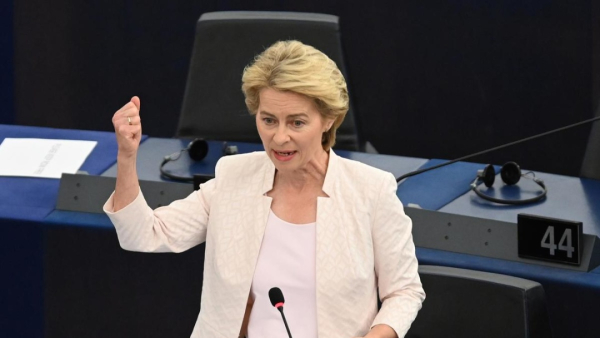
Following the initial proposal by the European Commission, announced on June 9 by its President Ursula von der Leyen, to ban former Russian combatants from entering the EU, discussions focused for a long time on how to actually implement this measure and qualitatively verify whether individuals applying for visas had participated in Russia’s aggression against Ukraine.
The media reported that several countries benefiting from a large number of Russian tourists expressed objections to this step, proposing to limit the category of persons to whom sanctions apply to only current military personnel, thereby drastically reducing the number of Russians affected by these sanctions.
For now, EU member states have agreed in principle to this step within the 21st sanctions package and have also agreed to further work on issues related to the practical application of the restriction.
This preparatory work is expected to take several months before the Council of the EU can provide final recommendations compatible and aligned with the Schengen system.
“We hope this will happen by October,” noted one European official.
PROTECTION FROM RUSSIAN COURTS
Another important point highlighted in the package is the non-recognition of any decisions by Russian courts aimed at EU operators complying with sanctions against Russia. These include organizations such as Euroclear, a depository located in Belgium, which holds a large volume of frozen Russian assets.
Furthermore, the EU will now provide practical legal support to any such operators if Russia decides to enforce its court decisions through third-country jurisdictions. In such cases, operators have the right to apply to national courts for direct orders prohibiting them from complying with any court decisions of third countries issued in favor of Russia and against the interests of such operators.
Although many question the EU’s real unity amid growing concerns and objections from individual member states regarding certain provisions of the sanctions package, which may signal the predominance of economic interests over security concerns, a senior EU official supported the assertion that the goal of the 21st package was to “support our ambitions in a very complex and unfavorable context,” and that, as with other sanction packages, important decisions were made, particularly against Russia’s energy sector, which is the main driver of the Russian military machine.
In this context, as Russia faces a fuel deficit and consequently attempts to import it from refineries in third countries processing Russian crude oil, the EU has also imposed sanctions on one such refinery in Belarus.
Sanctions against the Georgian refinery “Kulevi” are being introduced with a 6-month delay. This means that sanctions will be imposed if the EU sees that the company continues to work with Russian crude oil.
RUSSIAN OIL PRICE CAP TO REMAIN
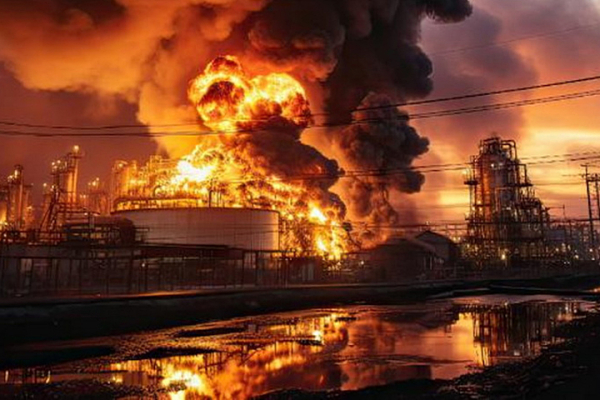
The EU has decided to extend the current price cap on Russian oil at $44.1 per barrel for another 12 months, until July 2027, which is more than 15 percent below its actual market value.
A senior EU official familiar with the preparation of the sanctions package stated that, according to the European Commission’s estimates, Russia will lose approximately 3.5 billion euros in revenue over the next 12 months due to the continued price cap on its oil.
If the EU had not extended the cap, an automatic review of the price would have occurred, leading to an increase to over $58 per barrel. This would have significantly helped the Russian budget amid global energy turbulence caused by the conflict in the Middle East, particularly the blocking of the Strait of Hormuz.
“The first goal we had when developing this package was to maintain our ability to reduce Russian revenues and avoid windfall profits in this very difficult situation, when others were issuing licenses for further imports of crude oil from Russia,” said one European official, adding that failure to achieve this task would nullify the entire effect of the years-long strategy of pressuring Russia’s revenues from fossil fuels.
PRESSURE ON THE SHADOW FLEET INCREASES, BUT EXCEPTIONS WERE INEVITABLE
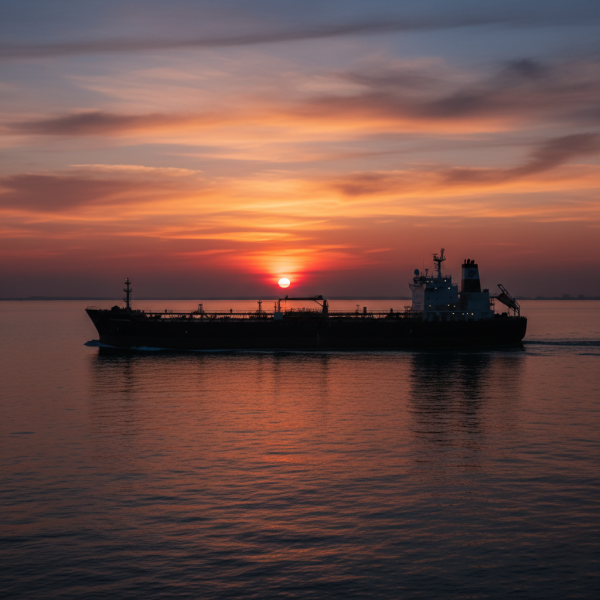
The new package targets an additional 36 vessels of the shadow fleet transporting Russian crude oil, as well as five entities cooperating with or facilitating trade using the shadow fleet.
The EU is undoubtedly the world’s number one in terms of sanctions against such vessels, the official emphasized.
“We have also introduced a very important provision that allows member states to confiscate goods transported by the shadow fleet after they have been landed by European forces as part of naval operations,” said a senior EU official, explaining that previously member states often faced the question of what to do with the cargo on sanctioned vessels they detained.
“So now there is an opportunity to simply sell this cargo, and the money will go to the EU member state that stopped the vessel,” the official said.
The EU has also expanded the criteria for identifying vessels subject to sanctions. They now apply to any third-country vessels providing services, making supplies, or refueling vessels of the Russian shadow fleet.
The EU has also targeted refineries that process or trade Russian oil through a complete ban on transactions. “We believe we can more effectively break the supply chains that ensure Russia’s oil export business,” said one senior EU official.
By imposing a ban on transactions with Russian refineries, the EU took into account that many of them require major repairs after Ukrainian strikes, and therefore, this measure, according to the EU, will significantly complicate any repair and restoration work.
GREECE SECURED AN EXEMPTION FOR LNG TRANSPORTATION
In the most controversial part of the package, the transportation of Russian LNG, a compromise decision was reached. Greece’s concern that a complete ban on transporting Russian LNG to third countries would harm its economy much more than Russia’s was taken into account. The argument was that Russia would continue to benefit from selling LNG to third countries, as this cargo would then be transported by tankers flying the flags of non-EU countries.
A senior European official familiar with technical consultations with LNG transporters explained that the complex system of this industry involves EU operators using specialized tankers, including icebreakers, which are on long-term lease, and that Chinese companies are the investors.
If a situation arises where EU operators cannot make lease payments due to loss of current revenue from LNG transportation, the vessels will be confiscated by investors and effectively become Chinese property.
Therefore, after assessing these risks, EU member states decided to grant a one-year exemption for the transport, purchase, or import of Russian LNG for delivery to third countries, after which the Council of the EU will have to decide – also unanimously – whether to maintain this exemption or not. At the same time, the ban on any LNG imports into the EU remains in force.
The exemption has two significant limitations, explained a senior EU official.
It applies to contracts signed before the date of the full-scale invasion (February 24, 2022). Also, transport volumes must not exceed the figures recorded in 2025, when the transport of Russian LNG by EU operators was at its lowest. It is estimated that EU operators transport approximately 20 percent of all Russian LNG annually.
Another exception relates to the energy security situation in Japan and South Korea. Both countries, given the war in the Middle East, have faced serious disruptions in energy supplies, so the EU has granted exemptions until March 31, 2028, for the supply of Russian crude oil and liquefied natural gas to Japan and LNG to South Korea.
GOLD, DIAMONDS, MILITARY-INDUSTRIAL COMPLEX, AND PROPAGANDA
The EU has also decided to focus on two additional trade sectors of Russia, namely gold and diamonds. Gold exports brought Russia $12 billion in revenue last year, and diamonds reportedly generated over two billion, an official said. Therefore, in addition to those already sanctioned, several new companies have been included in the package.
Over 30 new entities of the Russian military-industrial complex, particularly in the field of long-range drone production, have also been sanctioned, as well as another 20 entities in other defense industry sectors, including the manufacturer of a Russian analogue of the Starlink system.
Separately, the EU has targeted well-known Russian propaganda broadcasters, adding eight names to the list.
SENSE OF RELIEF, BUT WITH CAVEATS
The general feeling in Brussels after weeks of difficult discussions with no clear idea of when the sanctions package would be adopted can be described as relief, especially regarding the extension of the price cap on Russian oil for another 12 months – something the EU can certainly present as a strong step and confirmation of unity. The fact that the package contains the largest number of individuals and entities sanctioned simultaneously in history is also significant.
Welcoming the adoption of the package, European Commission President Ursula von der Leyen stressed that these restrictions continue to weaken the economic foundations of Russia’s military efforts “at a time when Ukraine is developing military momentum.”
At the same time, the situation where the bloc finds it increasingly difficult to unanimously adopt decisions on major packages cannot help but cause concern, as previously noted by Lithuanian Foreign Minister Gabrielius Landsbergis. (Note: The original text mentions Kestutis Budrys, but the common reference is to Landsbergis. I will retain the name as in the original text.)
Ultimately, the war Russia is waging against Ukraine and the constant uncertainty regarding the Strait of Hormuz affect the European Union and its single market, as well as the economies of certain member states, and the EU should be interested in ensuring the quickest possible end to the war, as rightly pointed out by top EU diplomat Kaja Kallas. That is why increasing pressure on Russia to such an extent that the Kremlin will be forced to sit down at the negotiating table, while simultaneously accepting some unavoidable side effects for the EU, would be a wiser long-term decision than facing prolonged aggression against Ukraine, which would further affect all of Europe.
Yevhen Matiushenko, Brussels