

The narratives about Ukraine launching a Russian missile towards Poland are another instance of anti-Ukrainian propaganda actively disseminated online.
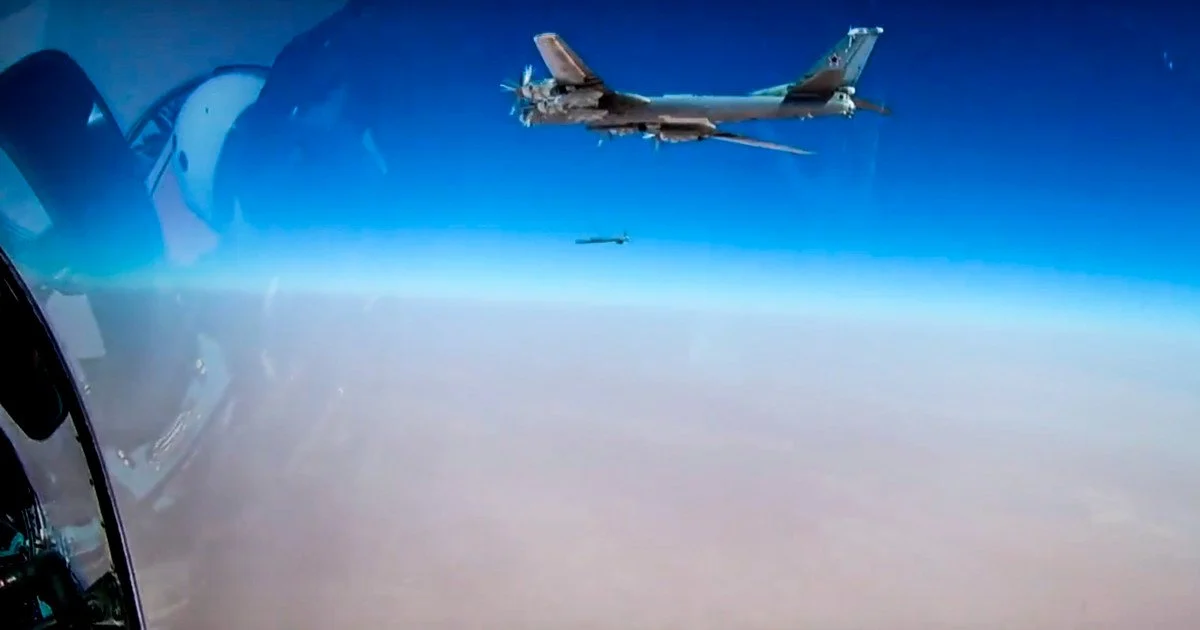
Russian strategic bomber Tu-95 launching a Kh-101 missile / © Associated Press
Conspiracy theories are circulating within the Polish segment of social networks suggesting that Ukraine might have intentionally attacked Polish territory with a Russian Kh-101 cruise missile, fragments of which were found near the settlement of Tarnawa-Kolonia.
The Polish publication Radar has labeled such claims as baseless, presenting a series of arguments that completely rule out the possibility of such a “provocation.”
According to the publication, the Lublin Prosecutor’s Office has essentially confirmed that the discovered munition is indeed a Russian Kh-101 cruise missile. Consequently, the authors note, the theories about Ukraine allegedly launching it represent yet another example of anti-Ukrainian narratives being actively spread on the internet.
Ukraine Could Not Have Obtained a Functional Missile
Radar’s first argument points to the practical impossibility of Ukraine acquiring a combat-ready Kh-101 missile.
The publication highlights that most of these missiles either reach their targets or are intercepted by Ukrainian air defense. After falling, they sustain critical damage, and the fragments are used solely for forensic research, electronic analysis, and documenting Russian war crimes. Restoring such a missile to a state suitable for combat use is practically impossible.
Ukraine Lacks Launch Platforms for the Kh-101
The second reason cited by the publication is the absence of aircraft in the Ukrainian Armed Forces capable of employing missiles of this type.
Radar recalls that the Kh-101 is a heavy air-launched cruise missile that can only be launched by strategic bombers such as the Tu-95MS and Tu-160. Ukraine definitively divested itself of such aviation back in 2006, when the last aircraft were decommissioned or transferred to Russia under disarmament programs. Modern Ukrainian and Western fighter jets are incapable of carrying such heavy and large missiles.
Integrating a Russian Missile with Other Aircraft is Unrealistic
The third argument presented by the authors concerns the technical incompatibility of the Kh-101 missile with any other platforms.
The publication explains that even with a functional missile and a suitable aircraft, its use would necessitate months of integration with onboard systems, access to Russian technical documentation, specialized suspension units, software, and navigation systems. In Radar’s view, implementing such a project under wartime conditions is virtually impossible.
Political Logic Refutes the “Provocation”
The fourth argument put forth by the Polish publication is the lack of any political rationale for Ukraine to undertake such actions.
Journalists emphasize that Poland remains one of Kyiv’s key allies and the primary logistical route for the delivery of Western military aid. Any deliberate attack on Polish territory would jeopardize the strategic partnership between the countries, inflict immense political and reputational damage on Ukraine, and yield no practical benefits.
Radar concludes that technical capabilities, military logic, and political circumstances unequivocally indicate the baselessness of the conspiracy theories circulating on Polish social networks regarding an alleged Ukrainian “provocation” involving the use of a Kh-101 missile.
It is noteworthy that the Russian Ambassador Georgy Mzhegalsky received a protest note from the Polish Ministry of Foreign Affairs following his summons to the ministry over the missile incident in the Lublin Voivodeship on July 30. The diplomat of the aggressor country was also urged to cease the war against Ukraine.
Comments Sort: New Old Popular Send