

Poland, Lithuania, Latvia, and Estonia exhibit the highest readiness for potential Russian aggression among NATO countries.
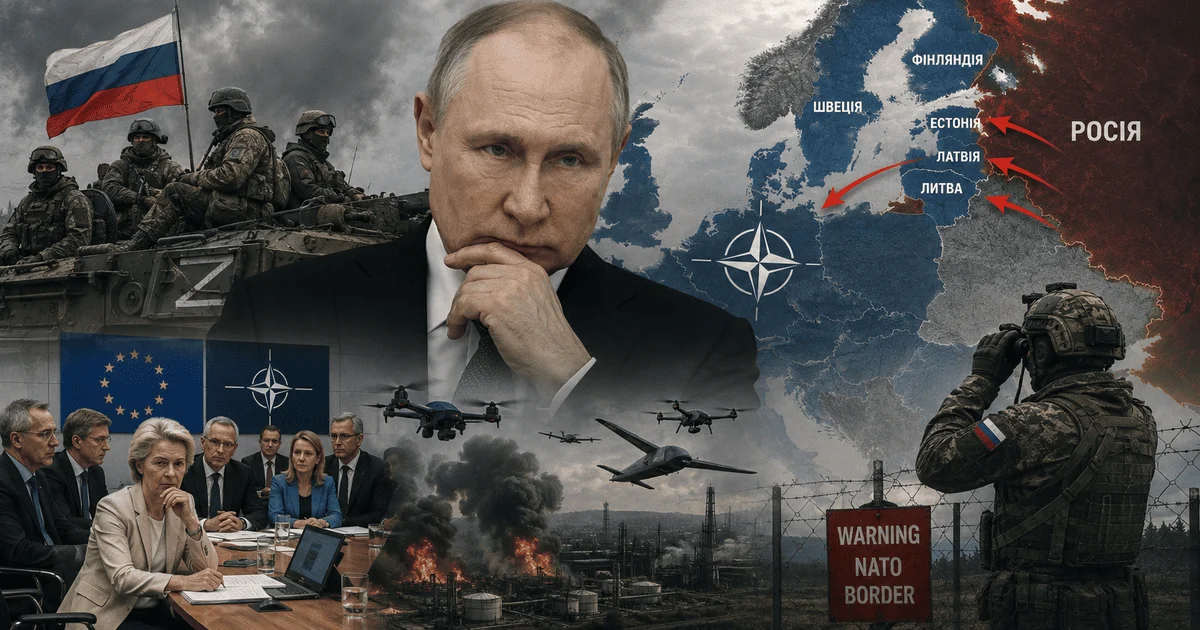
How Europe is preparing for war with the Russian Federation / © TSN
Eastern European countries situated near Russia’s borders are developing new security standards for the entire Alliance. They demonstrate a shift from formal budget figures to a genuine state of preparedness for total defense against Putin.
This is reported by Newsweek.
Russia’s Neighbors Prepare for Defense and War
At the 2025 NATO summit in The Hague, all member states committed to allocating 5% of their GDP to defense needs to protect against threats and ensure a fair distribution of the financial burden. The leaders of this initiative are precisely Russia’s neighbors: Poland (4.3% of GDP in 2025), Lithuania (4%), Latvia (3.7%), and Estonia (3.4%), along with Denmark (3.3%).
Despite their small size, these countries are showing the highest level of readiness for a potential conflict with the Russian Federation.
Eastern European nations have shaped their defense perspective through experiences of Soviet occupation and prolonged periods of repression, deportations, and Russification. Unlike Western Europe, which viewed Russia as an economic partner after the Cold War and reduced its military forces, the Baltic states and Poland recognized the persistent threat.
For comparison, the strength of the Bundeswehr decreased from 585,000 in 1990 to 177,000 in 2016, and the British army shrank by 30% between 2000 and 2024.
Following their accession to NATO, the region began actively modernizing its armed forces. This was preceded by, among other things, numerous hybrid and military aggressions by the Russian Federation. Examples include the large-scale cyberattack on Estonia in 2007, triggered by the relocation of the controversial “Bronze Soldier” monument in Tallinn, which disabled government, banking, and media resources; Russia’s invasion of Georgia in 2008; and the annexation of Crimea in 2014.
After the full-scale war in Ukraine began, defense measures significantly accelerated. Currently, a 950-kilometer defense line with bunkers, dragon’s teeth, and minefields is being constructed along the borders with the Russian Federation. This is being integrated with Poland’s “Eastern Shield” program.
All of this is intended to be implemented by 2028 to secure the borders with Belarus and Russia’s Kaliningrad Oblast. Particular attention is being paid to the Suwałki Gap—a key point of potential tension between Poland, Lithuania, Belarus, and Kaliningrad.
In addition to land defense, Poland is preparing to form the largest army in the EU and the second largest in NATO, after the United States. The Baltic states have already reinstated conscription. Notably, Lithuania is recording a record number of volunteers.
The concept of “total defense” also encompasses other societal spheres, including digital and civil security, as well as energy independence. To this end, Estonia has opened a data embassy in Luxembourg to safeguard state registers in case of occupation. In Baltic schools, children are being taught drone operation, and civilian hospitals are preparing for wartime conditions.
Against the backdrop of Donald Trump’s criticism of European defense spending, the former “weakest links” of the Alliance are transforming into key innovators of European security.
Putin May Disrupt NATO Troop Deployment
It is recalled that the federal government of Germany is developing workarounds in case regional authorities, involving the far-right party “Alternative for Germany” (AfD), attempt to block or delay the movement of NATO forces through the country.
Berlin’s concerns are linked to the growing popularity of the AfD, whose representatives hold pro-Russian views. If this party leads governments in individual states, it will gain control over regional police and administrative resources, potentially significantly slowing down Alliance logistics.
Germany is expected to serve as NATO’s primary logistical hub during a potential Russian attack, and the process of deploying heavy equipment and hundreds of thousands of troops to the eastern flank could take up to six weeks. To mitigate the threat of sabotage, Berlin is considering transferring critical infrastructure protection functions to neighboring countries, as well as restricting AfD officials’ access to classified information about military operations.
Comments Sort: New Old Popular Send