

Four facets of Ukrainian presence at the world’s premier art forum
This year, at the 61st Venice Biennale International Art Exhibition, Ukraine’s voice resonates with exceptional power and diversity. Beyond the official National Pavilion and the extensive project by PinchukArtCentre, Ukrainian participation has been amplified by impactful artistic interventions. Collectively, these four initiatives paint a comprehensive portrait of a nation that, despite war, continues not only to create but also to reinterpret the global context through its unique tragedy and resilience.
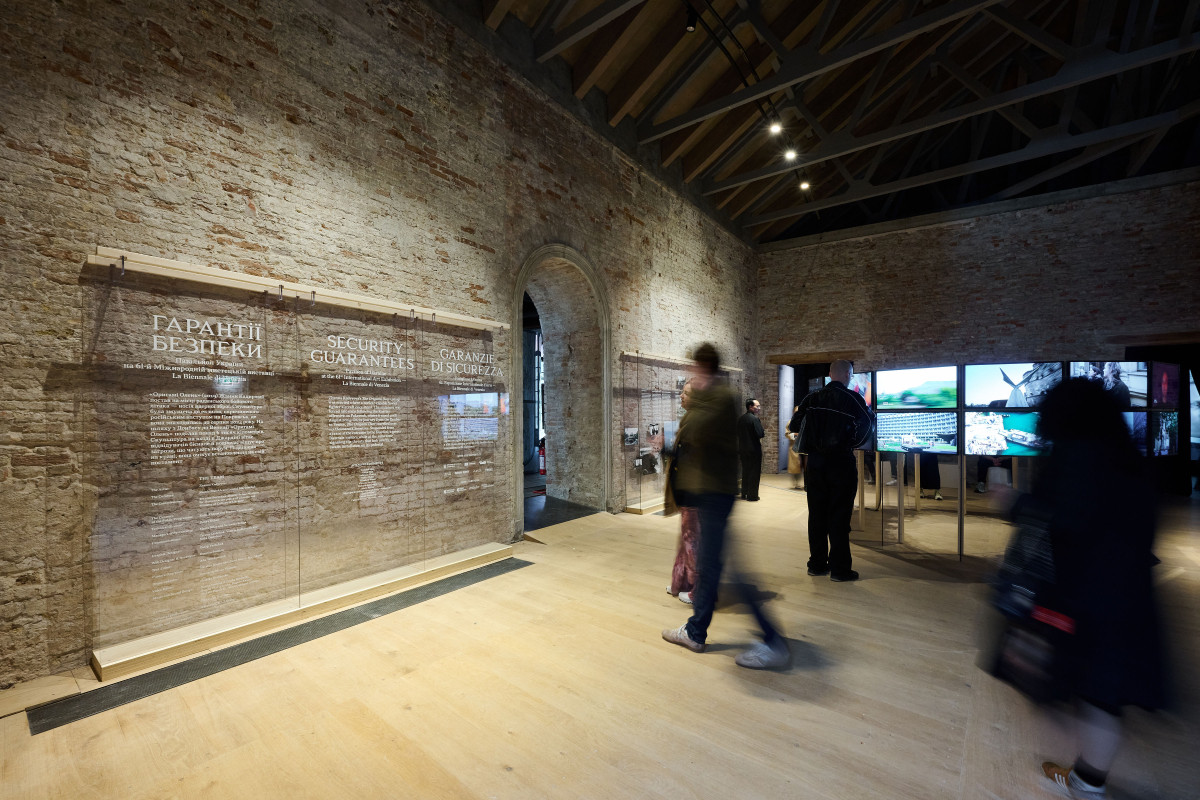
Photo by Valentyna Rostovyikova for the Ukrainian Pavilion
National Pavilion
This year, Ukraine is presenting the project “Safety Guarantees,” an exhibition by Zhanna Kadyrova curated by Ksenia Malikh and Leonid Marushchak. The Ukrainian Pavilion specifically focuses on the theme of broken promises and lost security. The central piece is Zhanna Kadyrova’s sculpture “Origami Deer.” Originally created in 2019 as a symbol of peace for a park in Pokrovsk, it stood where a Soviet-era nuclear-armed aircraft had been dismantled. However, in 2024, as the front lines approached the city, the “Deer” had to be evacuated, traveling 7,000 kilometers to become a symbol of forced displacement. The exhibition is divided into two parts: the sculpture itself, suspended from a truck crane in the Giardini, and documentation of its journey in the Arsenale, accompanied by archival materials about the Budapest Memorandum, reminding the world of Ukraine’s unfulfilled security assurances.
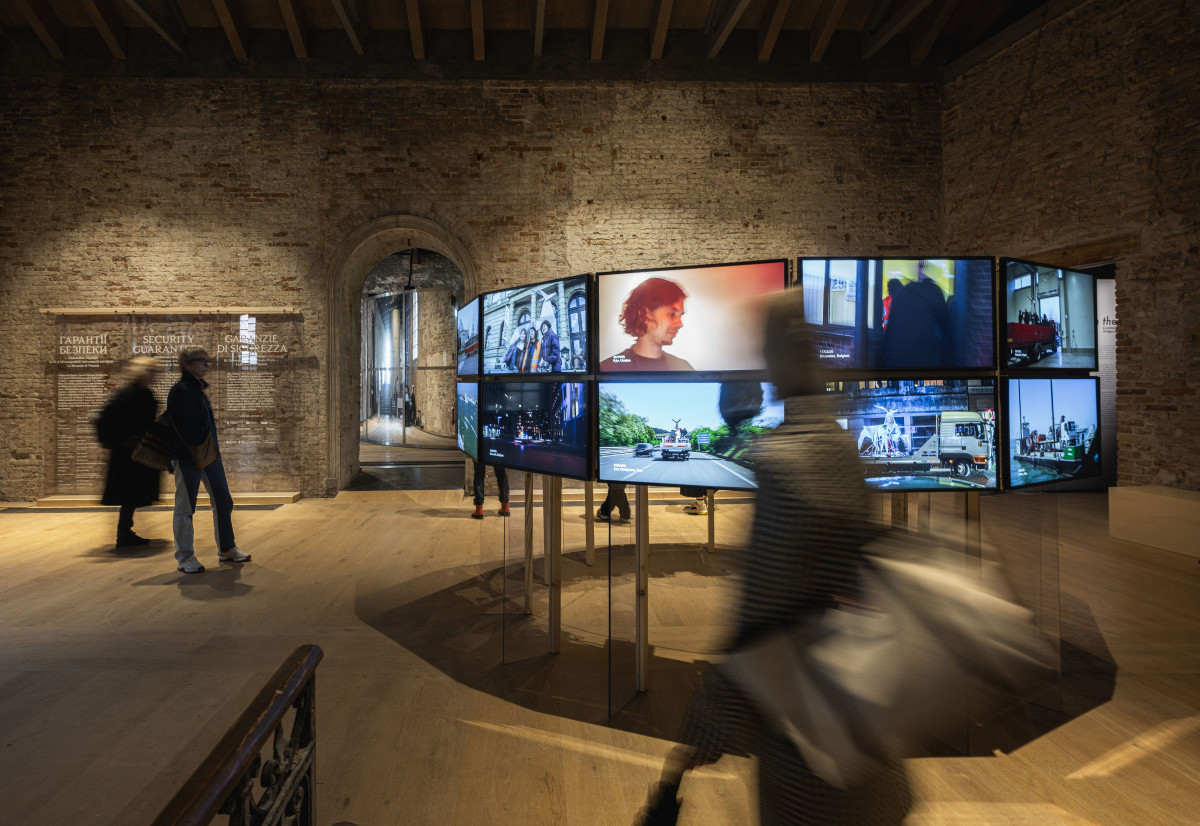
Photo by Valentyna Rostovyikova for the Ukrainian Pavilion
“When we created the sculpture in 2019, it had a different meaning. It was a decorative sculpture for a peaceful park. Now, the reality is entirely different—the park no longer exists, Pokrovsk is completely destroyed. Behind me, you can see a video installation that documented the sculpture’s journey from Pokrovsk to Venice. We traveled almost 7,000 kilometers, and in every city we stopped in, we met people from Pokrovsk. This project has many layers, and one of them is about people,” said artist Zhanna Kadyrova.
Pavilion Commissioner Tetiana Berezhna emphasized that the pavilion’s title, “Safety Guarantees,” serves as a direct reminder of international commitments that proved insufficient at the moment of Ukraine’s greatest threat. She also noted that on the eve of the opening, international partners issued a joint statement supporting Ukraine and highlighting the need for a consolidated stance on Russian aggression and crimes against Ukrainian culture. Tetiana Berezhna stressed that Ukrainian culture is currently one of the targets of Russian aggression, and its protection is part of national security.
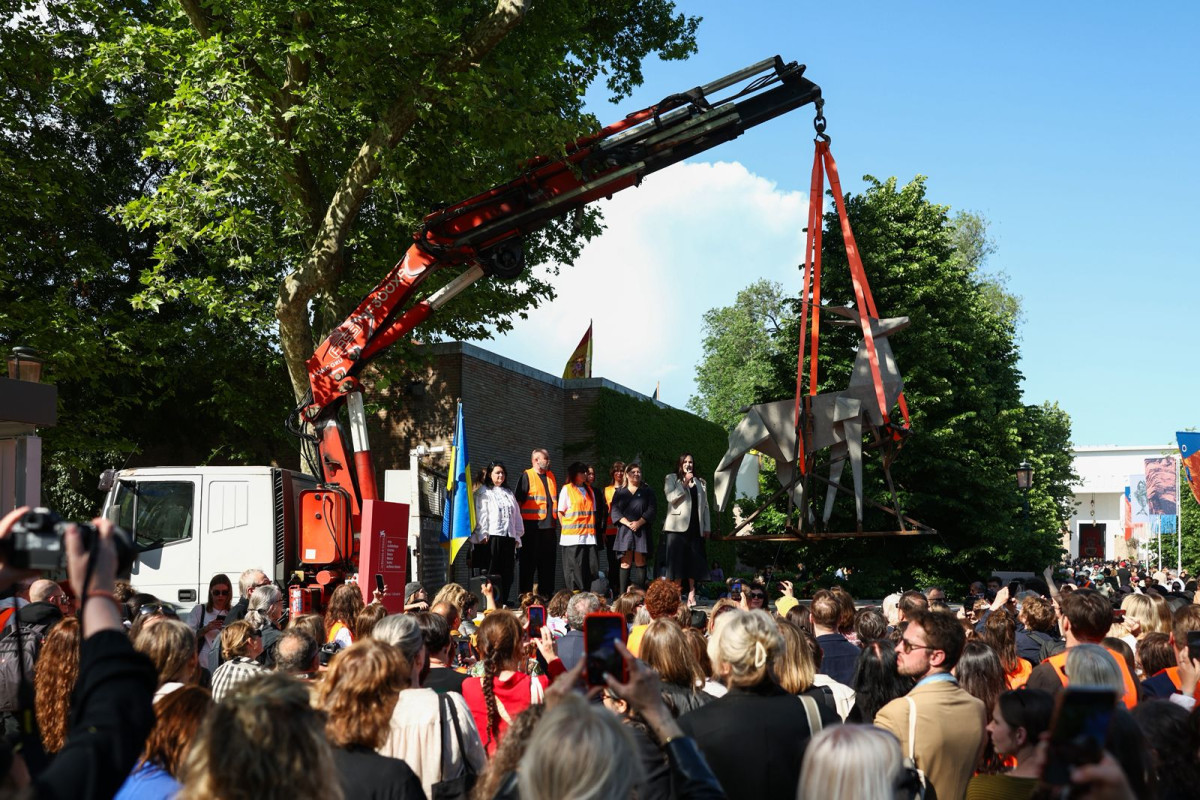
Photo by Anton Tkachenko
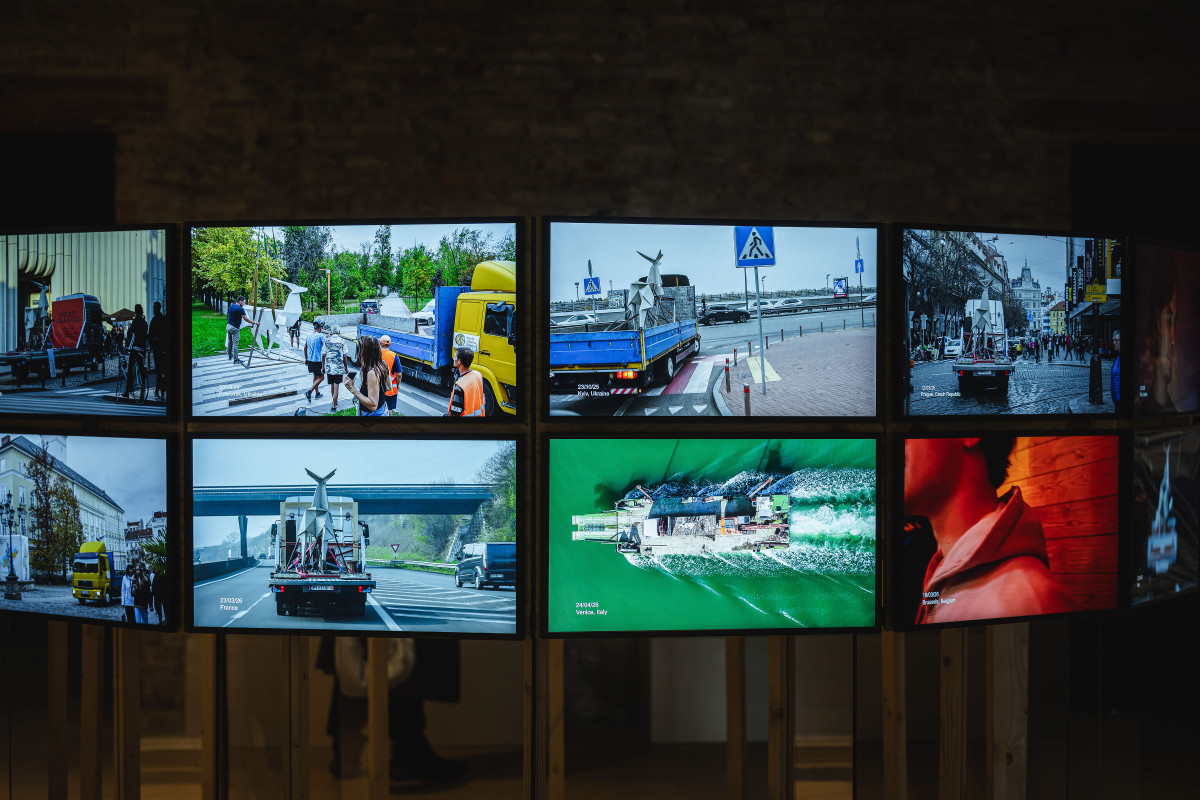
Photo by Valentyna Rostovyikova for the Ukrainian Pavilion
Intervention “Echo”
Daria Koltsova, a Ukrainian artist living and working in Paris, chose a distinctive visual language for her action to draw the international community’s attention to the war in Ukraine. The project, part of a separate series of interventions, is based on an iconic Venetian image: the custom of locals drying laundry on lines strung across canals and streets. For the artist, these clotheslines represent the city’s “visual code,” a language through which one can read the lives of its inhabitants, from social status to profession (for instance, the black attire of gondoliers). By adopting this familiar Venetian format, the artist aimed to convey Ukrainian narratives in a language understandable to the city.
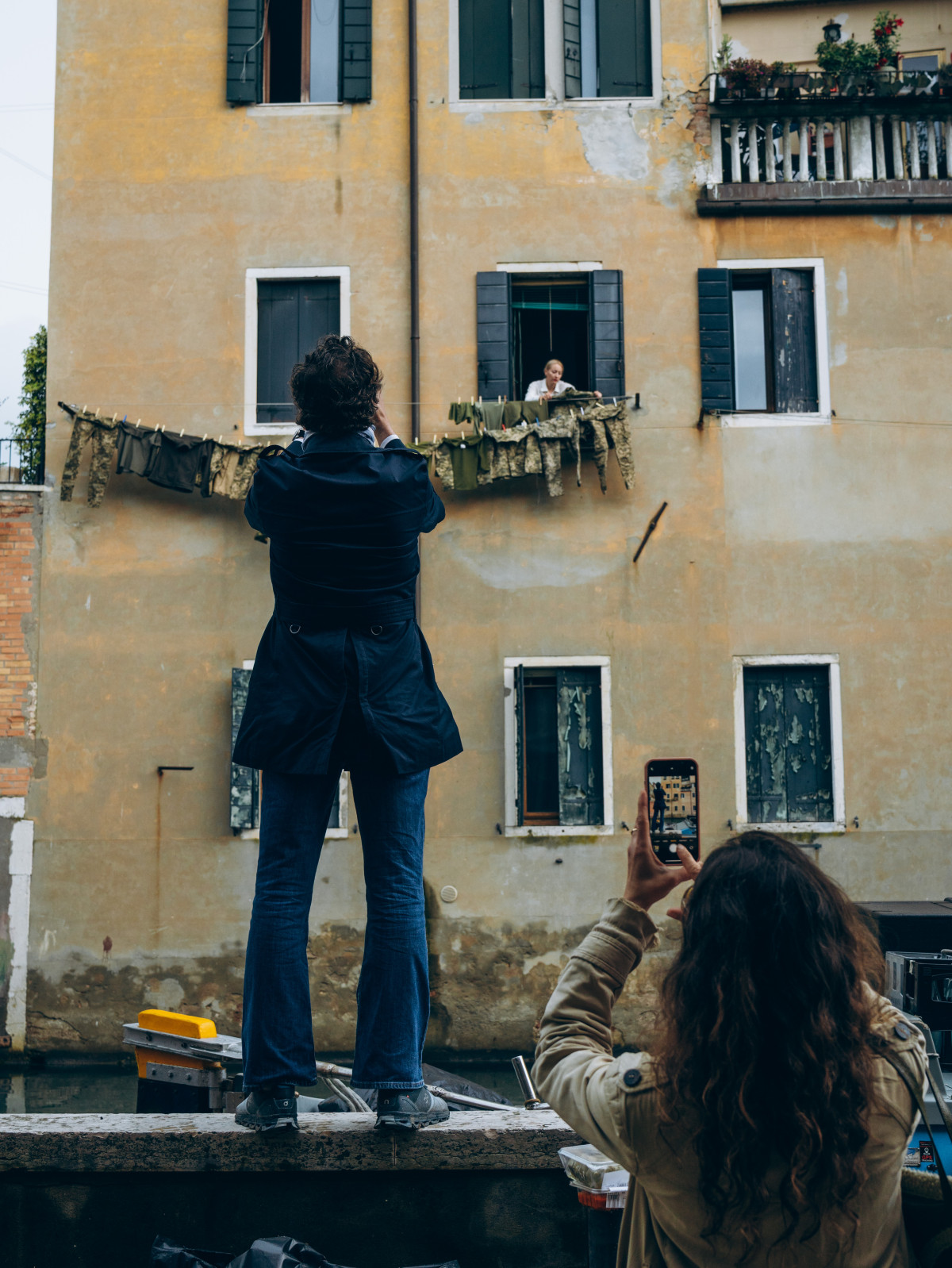
Photo by Anastasia Havrylenko
The intervention’s location was deliberately chosen. While exploring the architecture of the area near the Arsenale and Giardini, the artist discovered the street Ramo de la Tana. The name “Tana” refers to the ancient name of the Azov region (Tanais), from which raw materials for rope production were supplied to Venice. The “Echo” project became a metaphorical presence at the Biennale for those who cannot participate in the artistic celebration due to the war. Instead of civilian clothing, real military uniforms appeared on the Venetian lines.
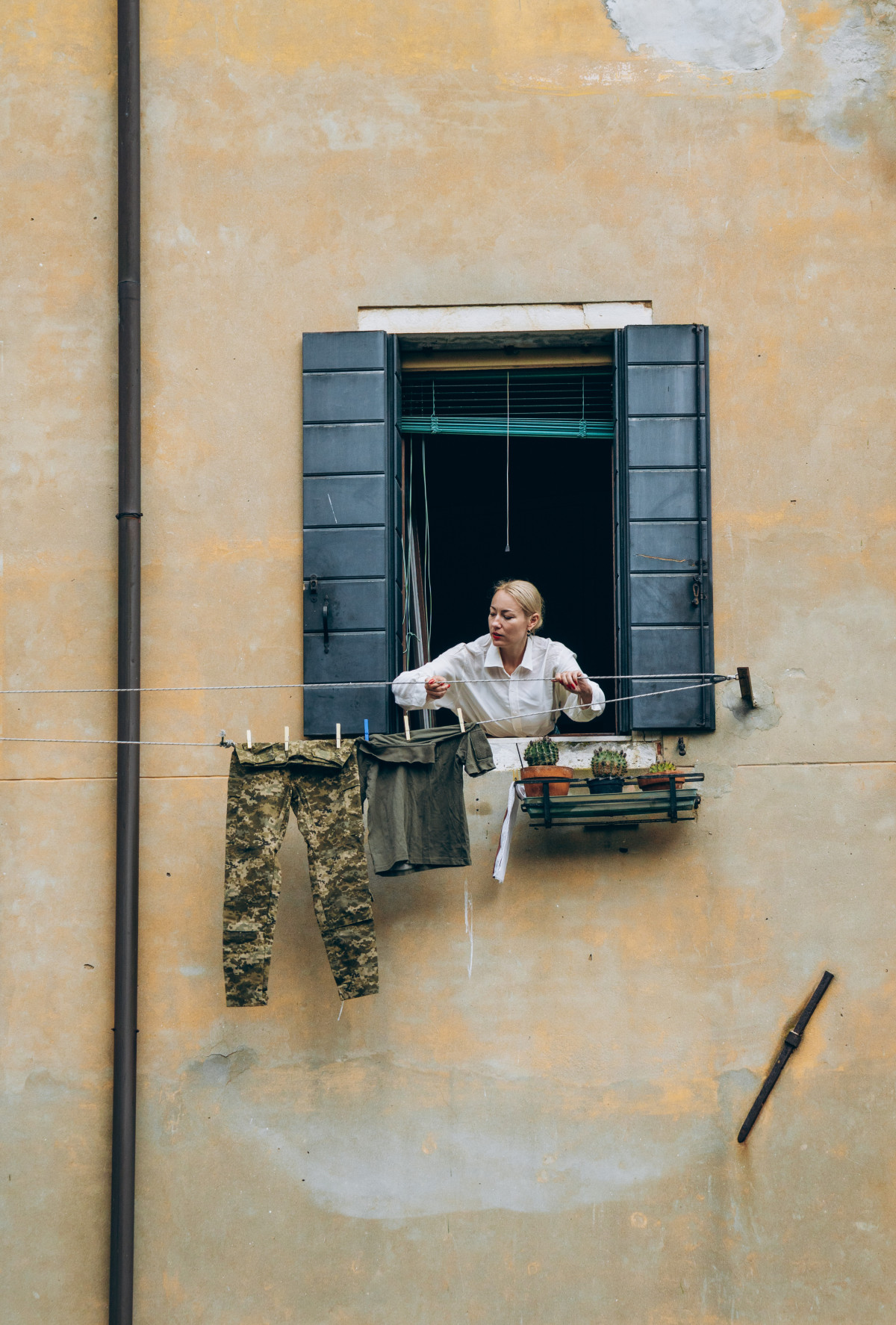
Photo by Anastasia Havrylenko
Daria Koltsova involved artist friends currently serving in the Armed Forces of Ukraine in the project. Their uniforms became a symbol of their unseen yet significant presence in the global cultural context.
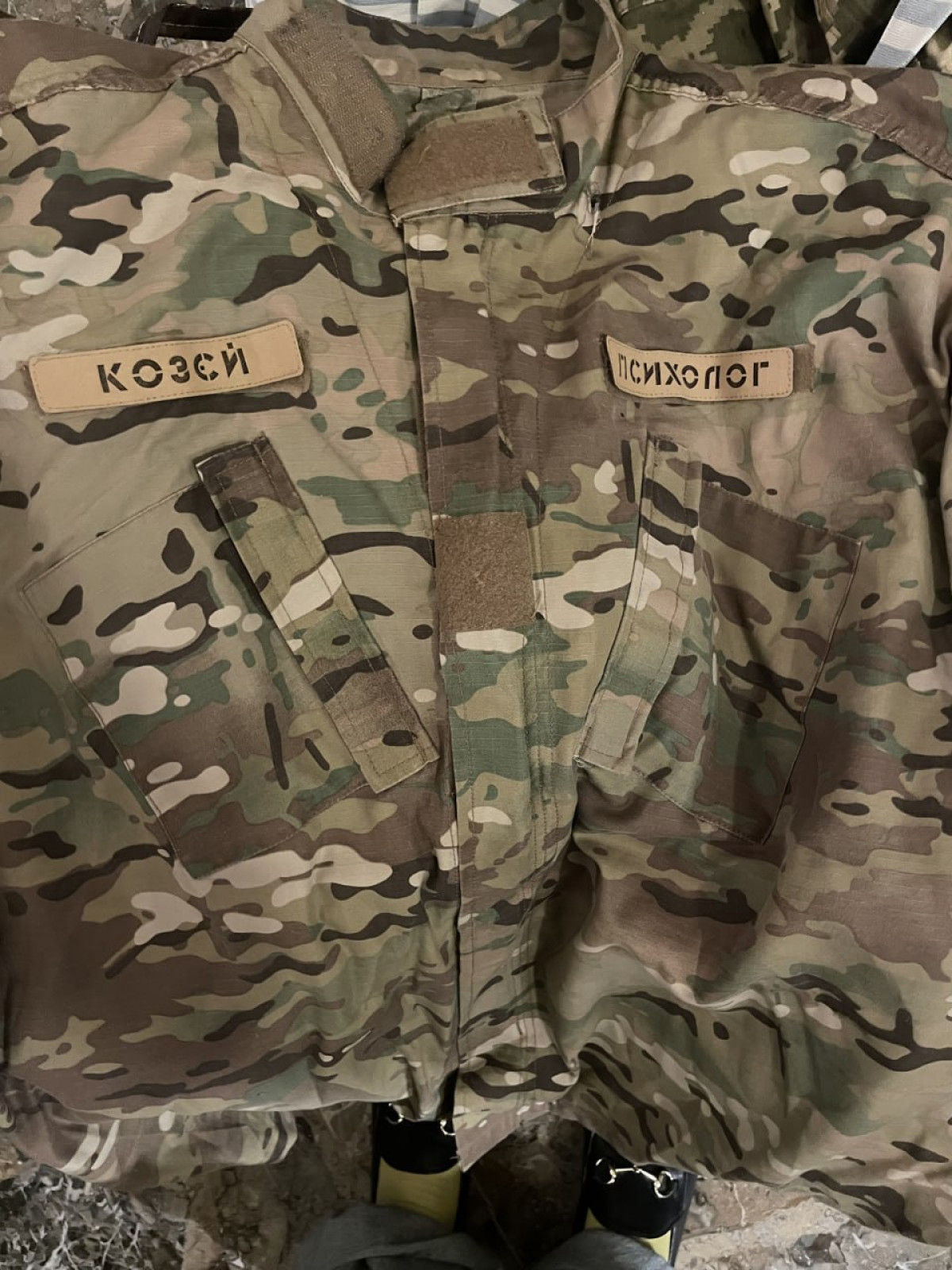
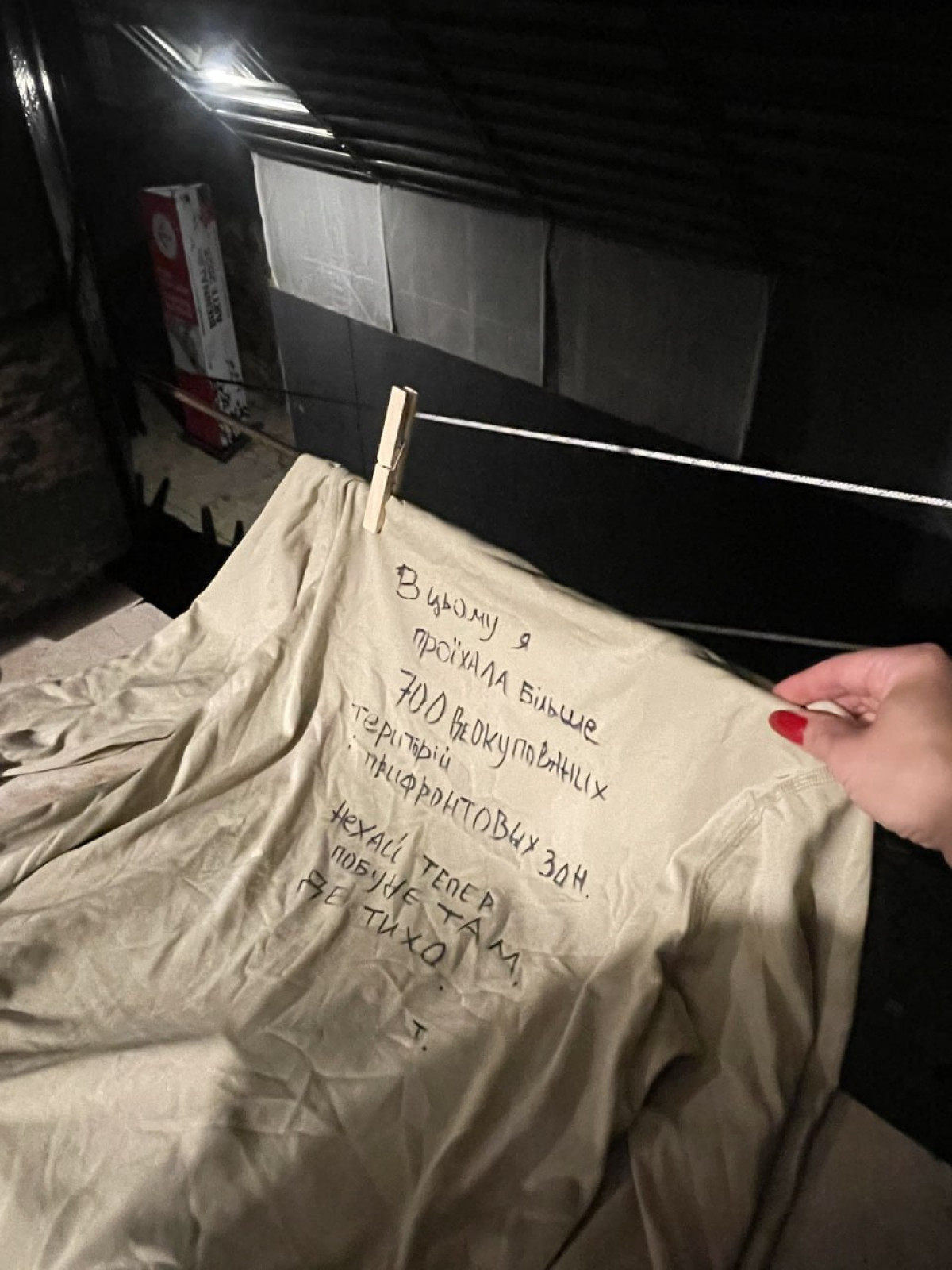
Particular attention is paid to the role of women. The artist drew a parallel with Venetian history: the production of ropes was the first official occupation that allowed women to move from domestic spaces into “workshops shared with men at the Venetian Arsenal,” altering the social structure. This historical fact highlights the contribution of Ukrainian women soldiers, whose uniforms were also included in the exhibition. With the assistance of volunteer Tata Kepler, uniforms from fighters of the “Azov” unit were provided for the project, adding a unique documentary and emotional weight to the work.
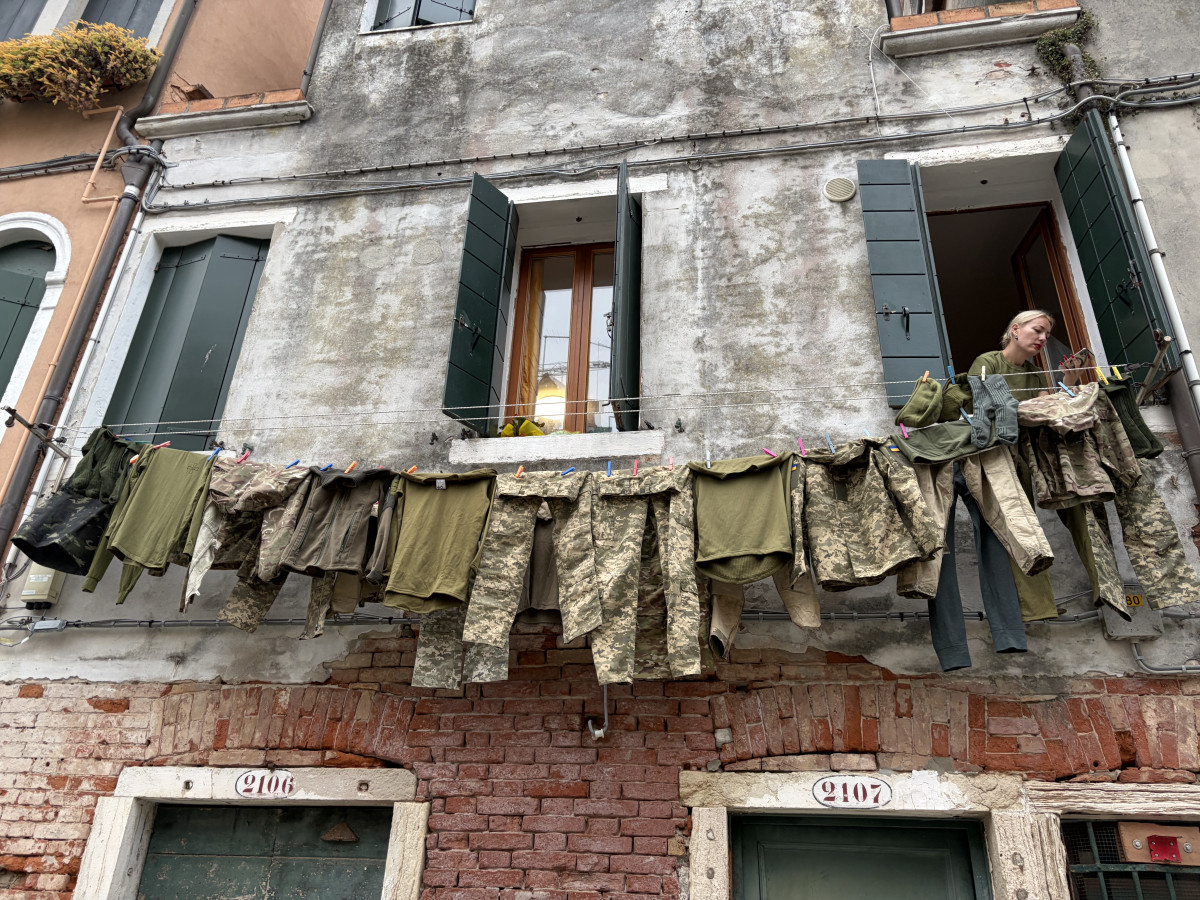
Photo by Oleksiy Ivanov
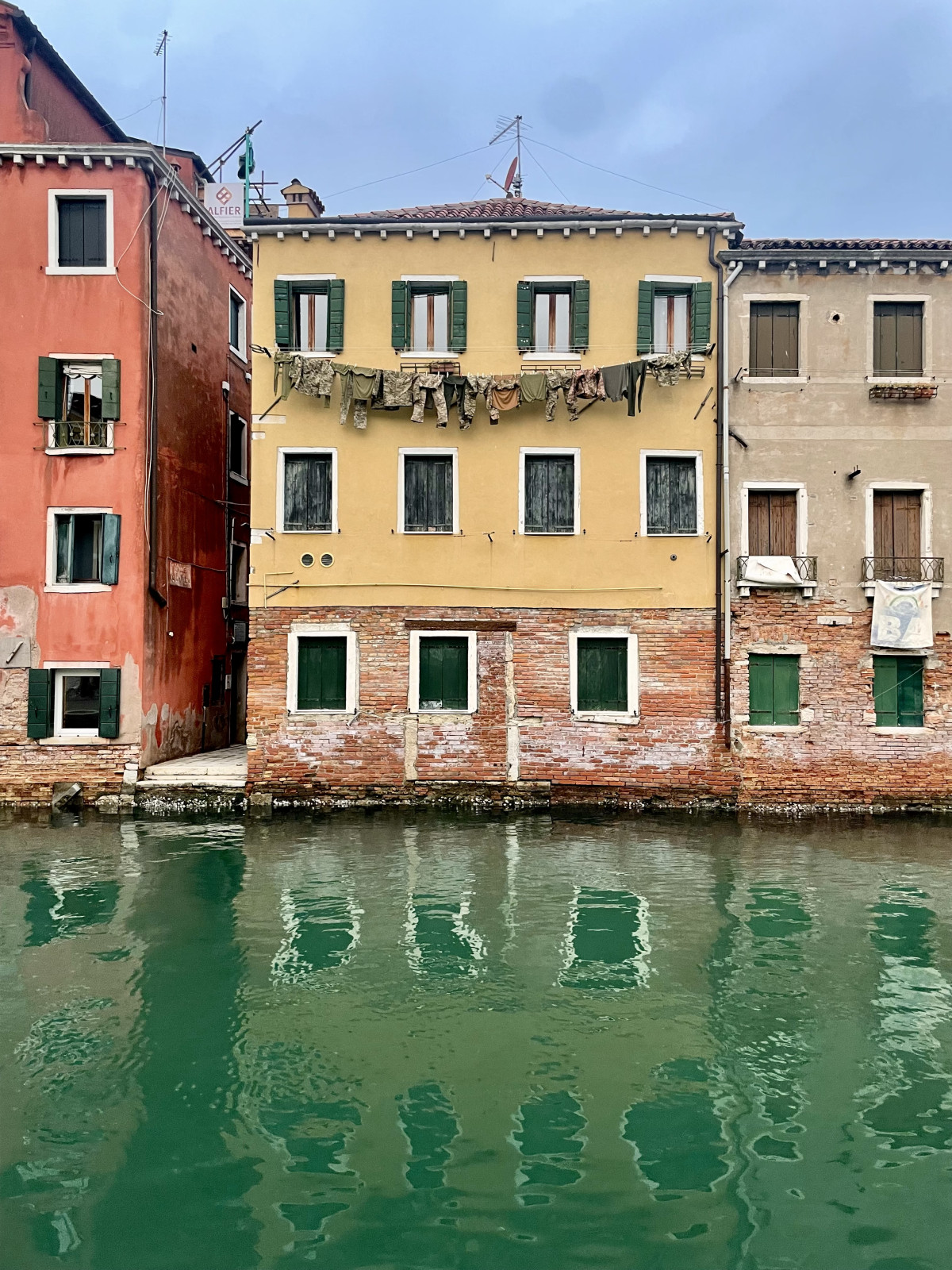
Photo by Anastasia Havrylenko
“The Invisible Pavilion”
The most poignant initiative was “The Invisible Pavilion,” realized with the support of Network Associazioni per Ucraine (NAU). This is a pavilion that does not physically exist, yet its posters have flooded Venice. They announce poetry readings, presentations, and workshops that could have taken place if their authors—Ukrainian artists—had not been killed by Russia. Each poster features the name of a real cultural figure from the list of losses (currently over 274 names, according to a monitoring website created by the PEN Ukraine club team) and the inscription “CANCELLED.” The project responds to accusations of Ukraine’s “insufficient presence” in the world by visibly demonstrating that the authors of future masterpieces have forever been added to lists of the deceased, reminding everyone of the price Ukraine is paying for its right to have a voice.
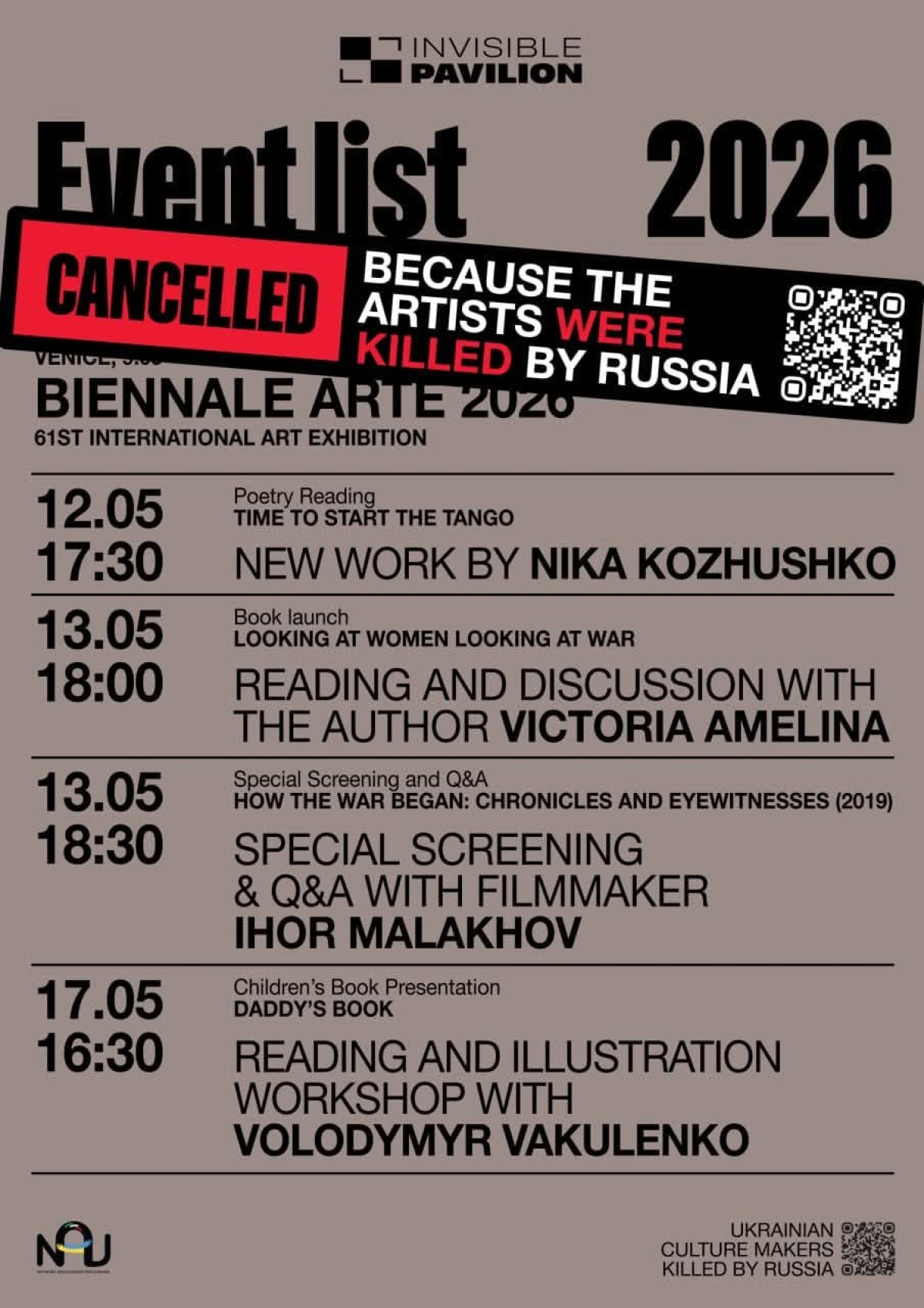
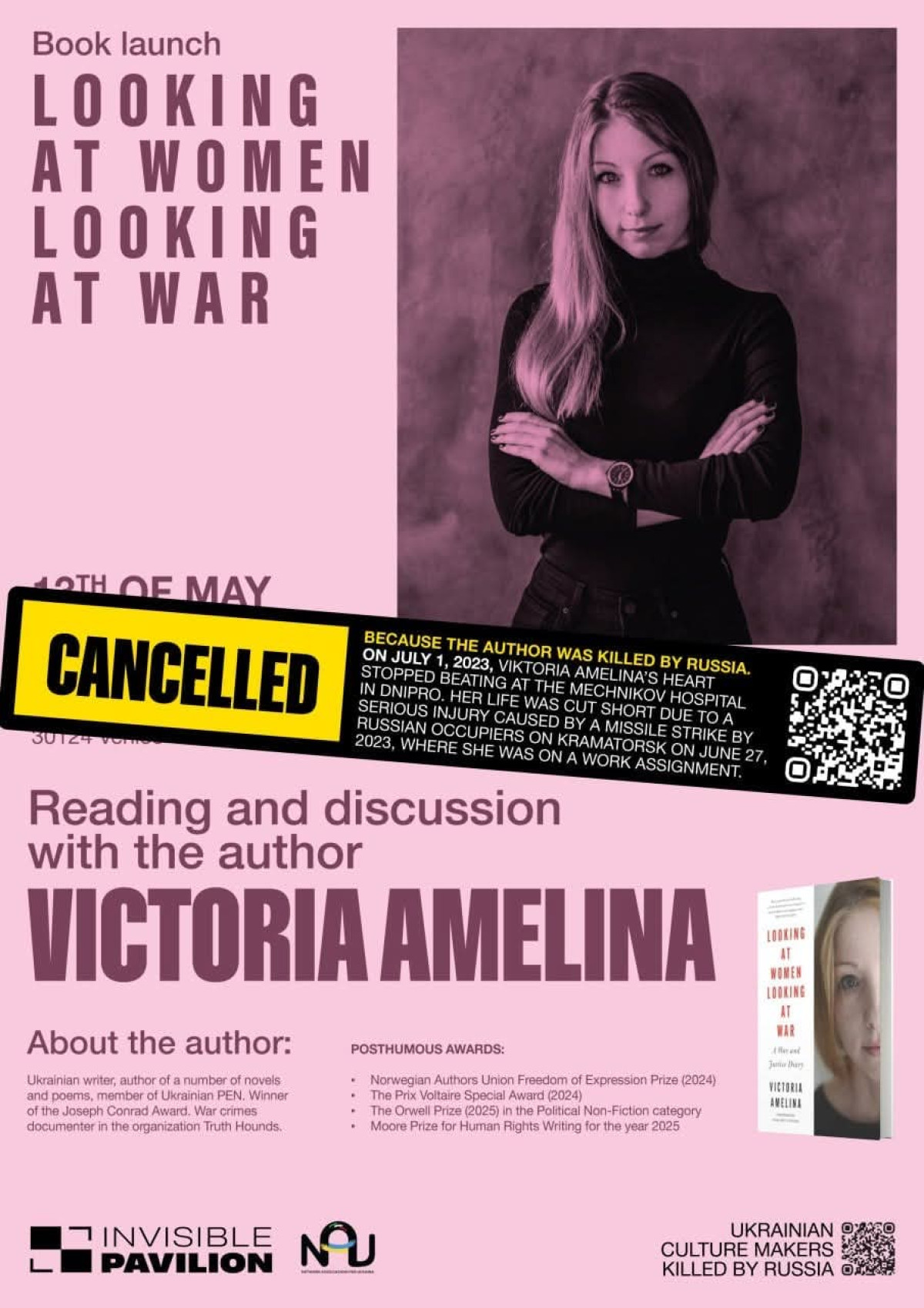
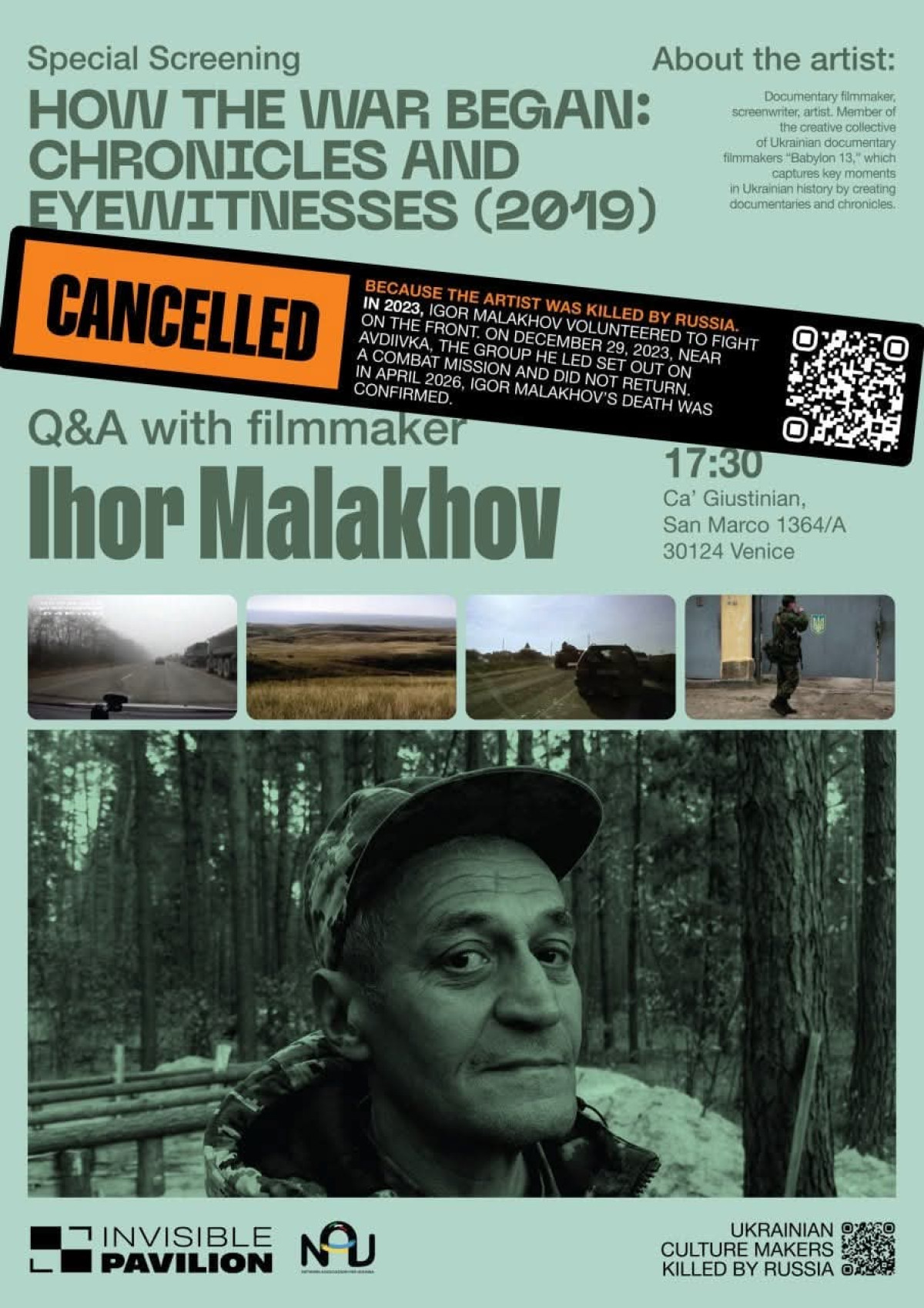
Poster design by Olga Kuzovkina
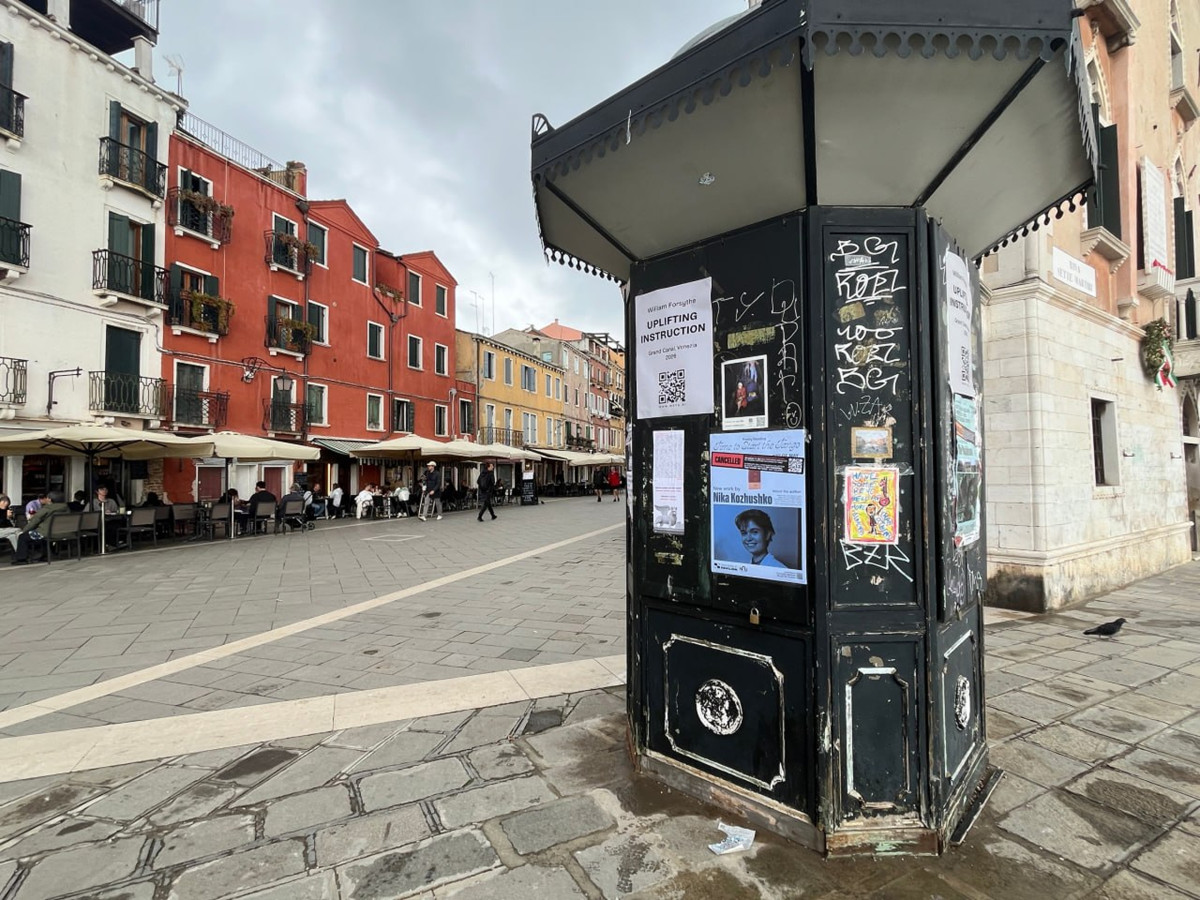
Photo by Zoya Zvinyatskovska
STILL JOY Exhibition
As part of the official parallel program, the Victor Pinchuk Foundation and the PinchukArtCentre presented the exhibition “Still Joy.” The project brought together leading Ukrainian and international artists. Kateryna Aliynik (Ukraine), Piotr Armyanovsky (Ukraine), Janet Cardiff & George Bures Miller (Canada), Julian Charrière (Switzerland), Tacita Dean (UK), Ryan Gander (UK), Gabo Arora (South Africa), Nikita Kadan (Ukraine), Zhanna Kadyrova (Ukraine), Alevtina Kakhidze (Ukraine), Roman Khimei & Yarema Malashchuk (Ukraine), Pavlo Kovenko (Ukraine), Bohdana Kosmina (Ukraine), Katya Lesiv (Ukraine), Kateryna Lysovenko (Ukraine), Simone Post (Netherlands), Ashfika Rahman (Bangladesh), Daniel Turner (USA), Alvaro Urbano (Spain), Lesia Vasylchenko (Ukraine), as well as Oleksiy Sai and Yuriy Gruzinov (Ukraine) united around the idea of joy not as entertainment, but as a life force and an act of humanity during a catastrophe. The overarching theme of the exhibition features the testimonies of Hlib Stryzhko, a marine who survived Russian captivity. His stories are integrated into the exhibition as sculptural elements, transforming fragile fragments of reality into resilient artistic statements, proving that the ability to perceive light is the highest form of resistance.
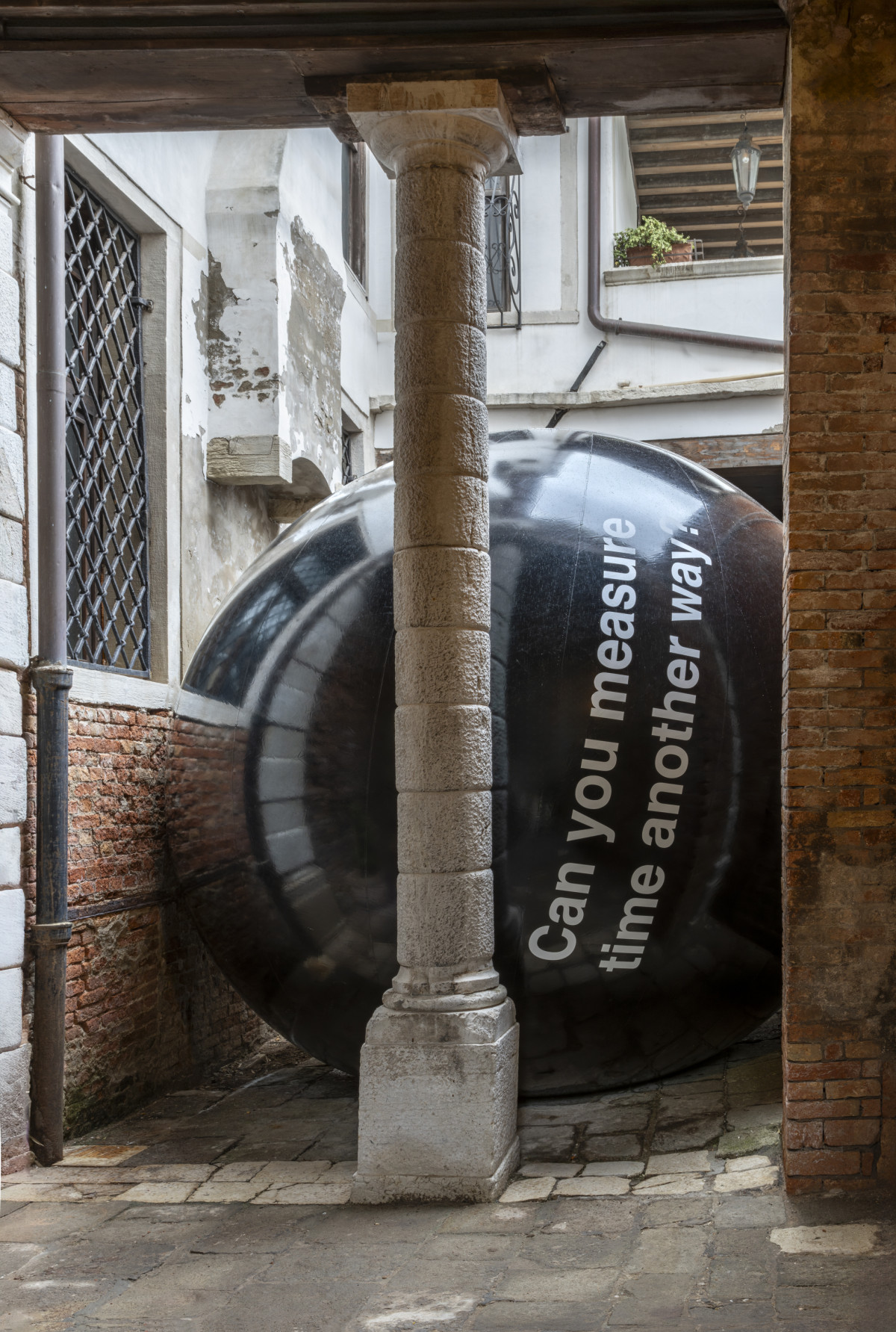
Ryan Gander, Can You Measure Time Another Way_, 2026. Still Joy — From Ukraine Into The World_Biennale Arte 2026. PinchukArtCentre. © Photo OKNO Studio
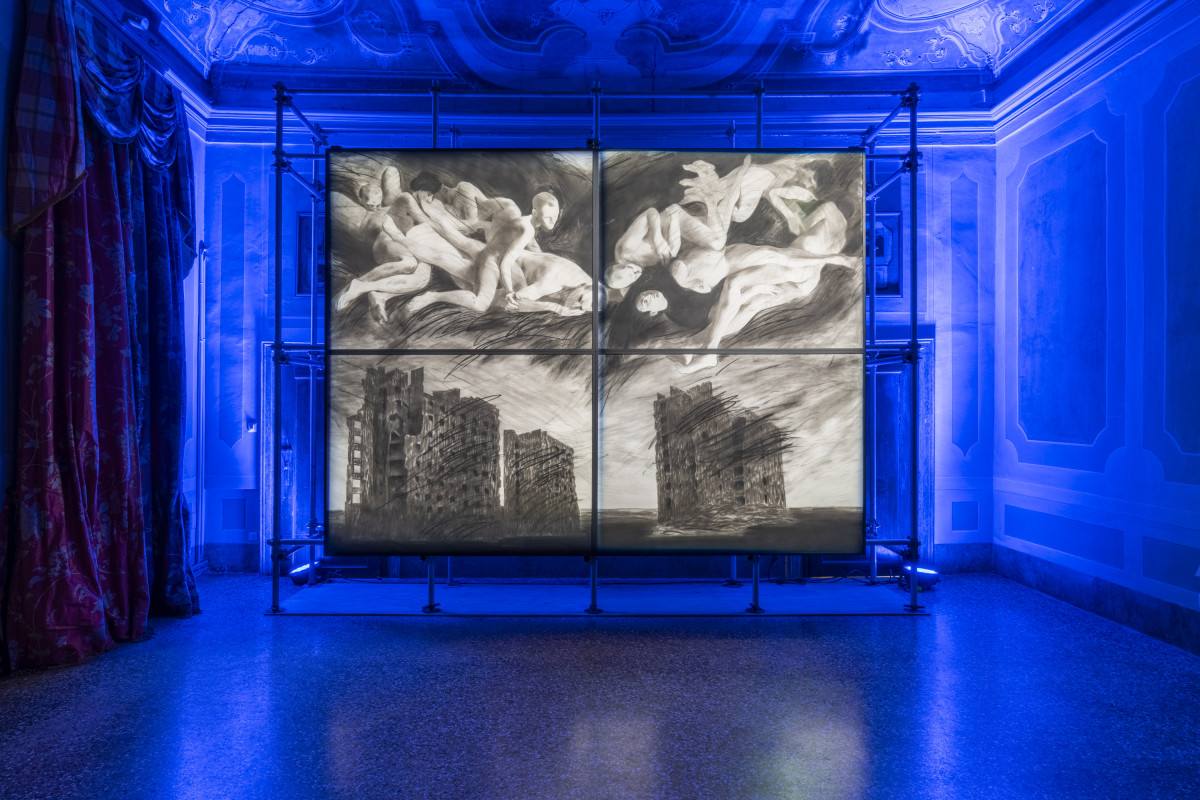
Nikita Kadan, After All, 2026. Still Joy — From Ukraine Into The World_Biennale Arte 2026. PinchukArtCentre. © Photo OKNO Studio
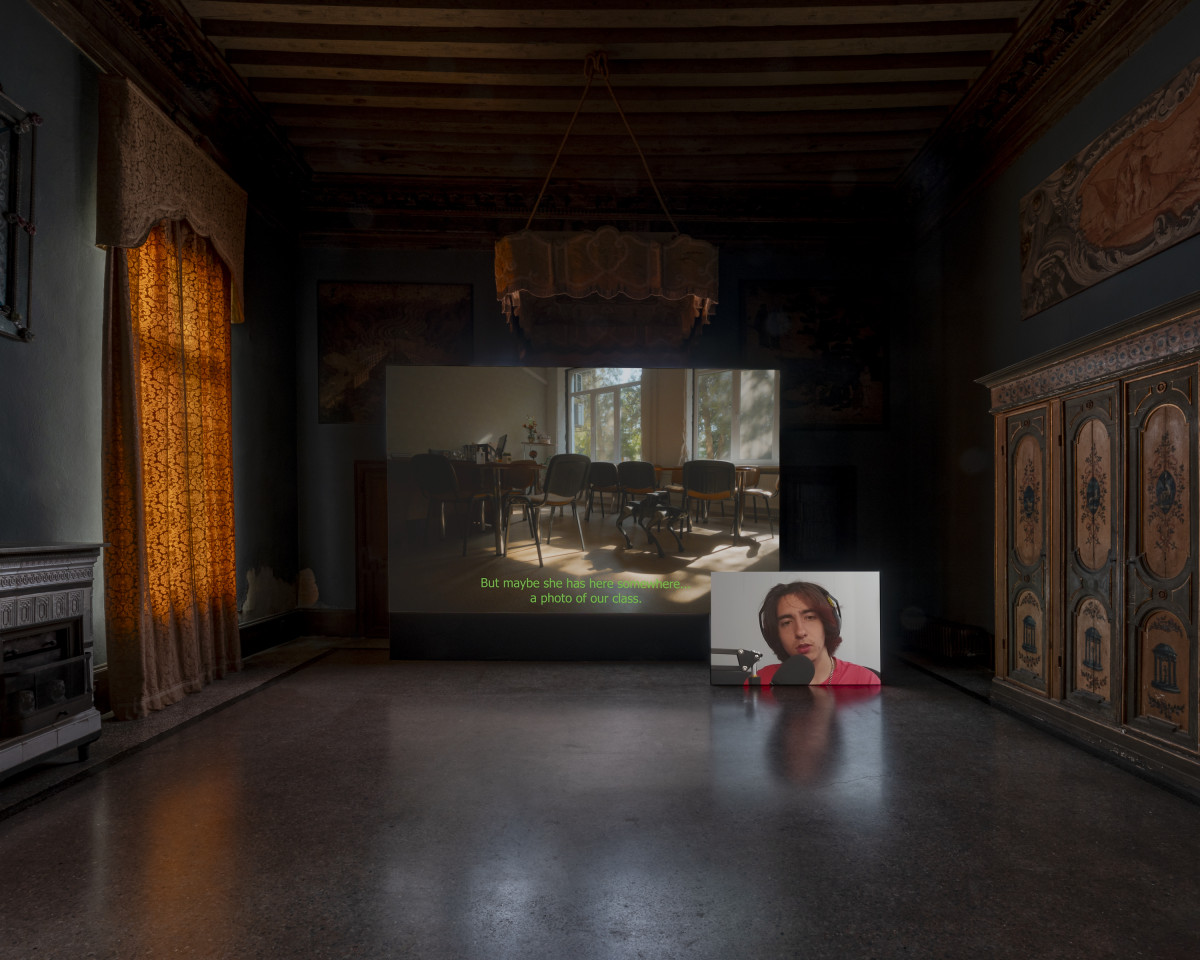
Roman Khimei & Yarema Malashchuk Open World, 2025. Still Joy — From Ukraine Into The World_Biennale Arte 2026. PinchukArtCentre. © Photo OKNO Studio
Оригінал статті: elle.ua