

The actress is hailed as a new icon of art-house cinema.
Following her triumph at the 2021 Cannes Film Festival, where Renate Reinsve received the award for Best Actress in “The Worst Person in the World,” the world discovered a vulnerable, chaotic, yet simultaneously strong and endlessly sincere actress. Her performance style is devoid of artificial drama – Reinsve works in nuances: subtle shifts in gaze, facial expressions, and mood.
This year, she has once again found herself in the spotlight, thanks to an Oscar nomination for Joachim Trier’s drama “Sick of Myself,” and her participation in Christian Mungiu’s new film “Fjord,” which is part of the program for the 2026 Cannes Film Festival. Additionally, the highly anticipated film “Backrooms,” featuring her, is set to be released in Ukrainian cinemas on May 28th.
On this occasion, we have compiled five films that best showcase the versatility and magnetism of one of the brightest stars of contemporary European cinema.
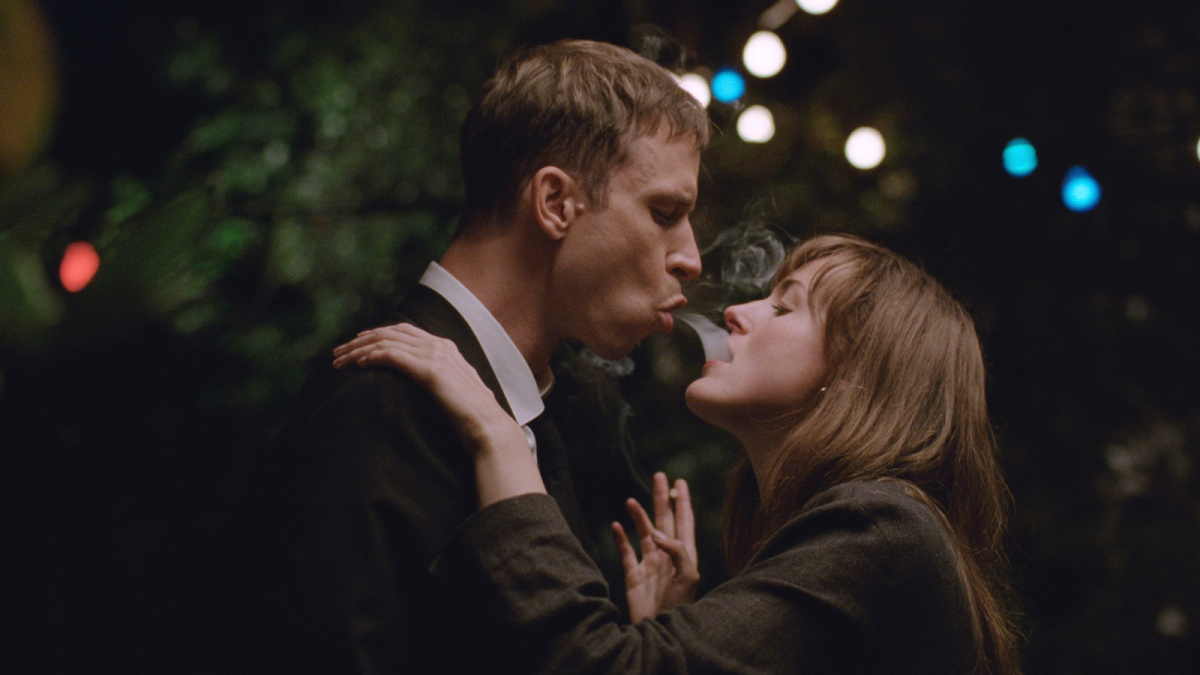
“The Worst Person in the World” (2021)
Reinsve’s collaboration with director Joachim Trier began with this film. The role of Julie was a true breakthrough for Renate. The plot unfolds over four years in the life of the protagonist – a young woman who cannot decide on a career or a partner. While in a relationship with the successful comic artist Aksel (Anders Danielsen Lie), Julie unexpectedly meets the charismatic Eivind (Herbert Nordrum), triggering another cycle of her existential quests.
This film is an ironic yet painfully melancholic drama about the generation of thirty-somethings who have countless opportunities but get lost in their own desire to be someone else. Reinsve managed to create a character who became the on-screen embodiment of modern indecision and the FOMO phenomenon, resonating instantly with millions of millennials.
The film garnered a significant haul of prestigious awards, including Cannes’ award for Renate, and was also nominated for an Oscar in two categories: “Best International Feature Film” and “Best Original Screenplay.”
“Sick of Myself” (2025)
Another landmark work by the Norwegian duo Trier and Reinsve. Here, the actress embodies the character of Signe – a talented theater actress from Oslo, whose life is poisoned by panic attacks and a complicated affair with a colleague. When her father, Gustav (Stellan Skarsgård), a once-renowned director, returns to Norway after a long absence, Signe is forced to confront not only his egocentrism but also a painful family history.
Gustav proposes that his daughter play the role of her own grandmother, who took her own life during the German occupation, in an autobiographical film. Initially, Signe refuses even to read the script, but eventually, working on this project becomes their only path to accepting the unspoken family trauma.
Reinsve creates an incredibly nuanced psychological portrait of a woman who finds understanding with her father through shared art. The film received the Grand Prix in Cannes and later became a historic triumph for Norway at the Oscars, earning nine nominations and a win in the “Best International Feature Film” category.
“The Shrouds” (2024)
In this intellectual and ironic drama from director Aharon Keshales and the cult studio A24, Renate Reinsve takes on the role of an ambitious playwright named Ingrid. The plot revolves around Edward (Sebastian Stan), an actor with facial deformities, who, after radical medical intervention, gains a new appearance and invents a new identity for himself. However, his past catches up with him when he learns that Ingrid, his former neighbor whom he was secretly in love with, has written a play about his former life. Renate brilliantly embodies the creative spirit whose perspective on art and human tragedies proves far more complex and cynical than it initially appears.
Reinsve’s character finds herself at the center of a tense romantic and professional triangle when she becomes infatuated with the charismatic Oswald, who suffers from the same condition that Edward once overcame. It is here that Renate demonstrates her ability to portray intellectual ruthlessness: her Ingrid easily replaces the protagonist in her play and life, without noticing – or deliberately ignoring – the truth behind the mask. The film was presented in the main competition at the Berlinale, where Sebastian Stan received a Silver Bear.
“The Other End” (2024)
In the science-fiction melodrama by Italian director Piero Messina, which also premiered at the Berlin Film Festival, Renate Reinsve effectively plays two souls in one body. The plot unfolds in a future world where the “Other End” technology allows for the brief return of a deceased person’s consciousness, implanting it into the body of a living “host,” so that loved ones can say a final goodbye.
Sal (Gael García Bernal), devastated by the sudden death of his beloved Zoe, agrees to this experiment. Thus, he meets Ava (Reinsve) – a female host whose own consciousness is temporarily displaced by the memories of his deceased wife.
Where does love reside – in familiar facial features or in the elusive energy of a person’s presence? Reinsve masterfully conveys this duality: her character artfully balances between the sorrow of the resurrected Zoe and the personal drama of Ava herself, who rents out her body to escape her own grief.
“Backrooms” (2026)
In her new project, Renate Reinsve delves into a realm of pure existential horror, where her character must test not only logic but also her own psyche.
The film from A24 is based on the viral internet phenomenon of the Backrooms – an image of an endless liminal labyrinth of empty yellow rooms that flow into one another under the oppressive hum of fluorescent lamps. The feature-length horror tells the story of a furniture salesman, Clark (Chiwetel Ejiofor), who accidentally disappears into this surreal dimension. Reinsve embodies the character of Mary – Clark’s psychotherapist, who embarks on a search for him.
For Renate, this is an ideal playground for her acting: her character attempts to maintain professional composure and rationality in a place where time loses its meaning. The actress expertly conveys the state of a person accustomed to analyzing the fears of others, but who suddenly becomes a victim of oppressive disorientation and the feeling of being watched in the empty offices.
За матеріалами: elle.ua