

The Russian Federation’s threats to strike Kyiv turned out to be a psychological attack aimed at intimidating foreign ambassadors and pressuring the United States. Political scientist Volodymyr Fesenko discussed the failure of this PSYOP and provided a forecast regarding the Russians’ summer offensive.
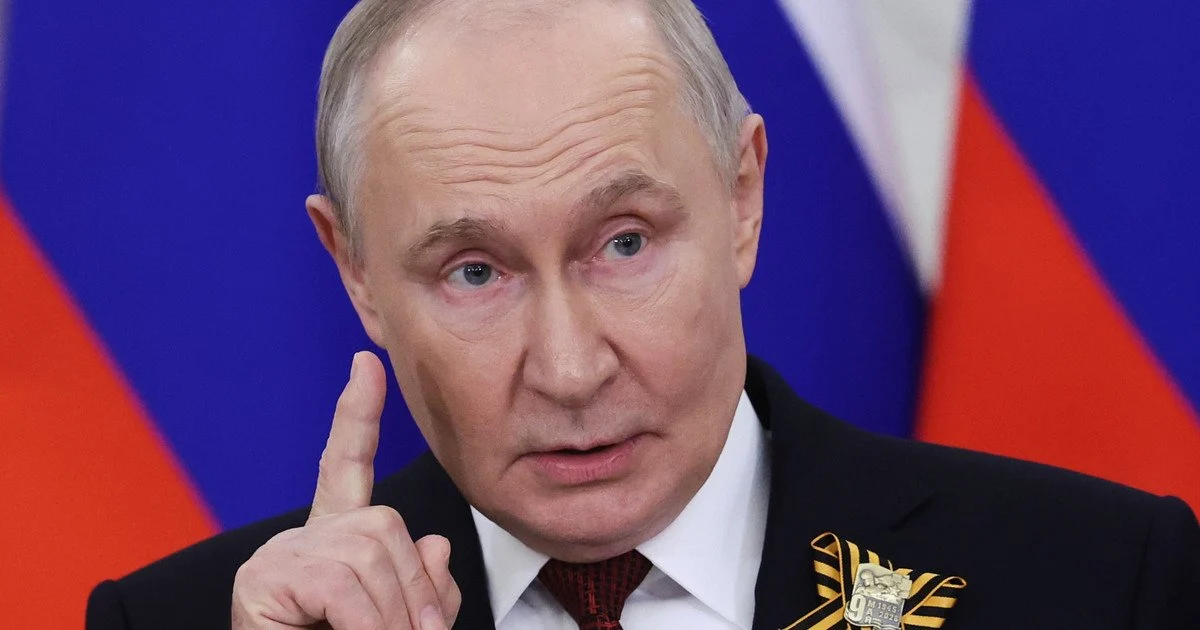
Volodymyr Putin / © Associated Press
Russia’s statements about systematic strikes on Kyiv represent psychological pressure. Through this special operation, the Kremlin intended to provoke panic among foreign diplomats and, by pressuring Washington, to bring the US back to the negotiating table on Moscow’s terms.
This was stated by Ukrainian political scientist Volodymyr Fesenko.
Objectives and Targets of Russian Information Pressure
The political scientist notes that the threats were voiced by the Russian Ministry of Foreign Affairs, not by Putin or the Ministry of Defense, in order to sow panic globally. Russia hoped that foreign ambassadors would massively leave Kyiv, which would supposedly demonstrate its advantage in the war.
“So far, this appears to be a powerful Russian PSYOP (psychological special operation), I would even call it a ‘mental attack,’ but involving the Russian Ministry of Foreign Affairs. Although they are threatening Ukraine, they were actually trying to scare the Western diplomatic corps in Kyiv and exert pressure on the US,” stated Volodymyr Fesenko.
He added that the Kremlin aimed to achieve a significant effect directly through informational pressure on diplomats and residents of the capital.
“Russia would have achieved a political-psychological victory even without the use of weapons,” emphasized the analyst, stating that this plan failed thanks to the principled stance of the EU, the UN, international partners, and the composure of Kyiv residents.
A separate objective of the PSYOP was to pressure the US leadership: Russian Foreign Minister Sergey Lavrov personally called US Secretary of State Marco Rubio to convey a warning for Donald Trump.
However, the attempt failed – Rubio reacted cautiously, Trump provided no response, and the US Embassy in Kyiv continued its operations. Furthermore, the threats were directed at the domestic Russian audience amidst disappointment with the protracted war and the absence of victories on the front lines.
Further Threats and Military-Political Scenarios
Volodymyr Fesenko noted that the fact that strikes have not yet occurred does not mean they won’t – Russians simply need time to accumulate missiles. These threats to diplomats could be a cover for actual massive attacks, as Russians are counting on Ukraine lacking sufficient missiles for “Patriot” systems.
The analyst believes that in the coming months, Russia will attempt a summer offensive, as its spring attacks completely failed. This is how the Kremlin seeks to strengthen its position for future negotiations, although it is unlikely that Russians will be able to capture all of Donbas by the end of summer. Additionally, they will once again rely on massive air strikes.
Should the US negotiations with Iran conclude, there might be an attempt to resume trilateral peace talks involving Vitkoff and Kushner. However, there will be no progress if the territorial issue remains the central focus. The expert outlined the conditions under which a new phase of diplomatic settlement might open in the autumn.
“In my view, a new window of opportunity for the real resumption of the negotiation process could emerge in the autumn, if the Russian summer offensive attempt fails, if Ukrainian air strikes can cause a fuel crisis in certain Russian regions and further weaken Russia’s capacity to continue the war against Ukraine, if sanctions pressure on Russia is intensified, and if the US, in the negotiation process, focuses on a ceasefire rather than the territorial issue, and if Washington starts pressuring Russia in the negotiations, not Ukraine,” concluded Volodymyr Fesenko.
Russia Threatens to Strike Kyiv Again – Latest News
We remind you that Moscow has decided to resort to telephone blackmail once again: the head of the Russian MFA, Lavrov, **called US Secretary of State Marco Rubio.**
For their part, the embassies of France, Poland, and the EU representation rejected the threats from the Russian MFA regarding strikes on Kyiv. Diplomats will not leave the capital **and are continuing their work as usual.**
In turn, UN Secretary-General António Guterres expressed deep concern over Russia’s statements about plans to attack Ukrainian defense enterprises and decision-making centers in Kyiv.
Comments Sort: New Old Popular Send