

Most people don’t even consider that mirrors and regular glass require different care.
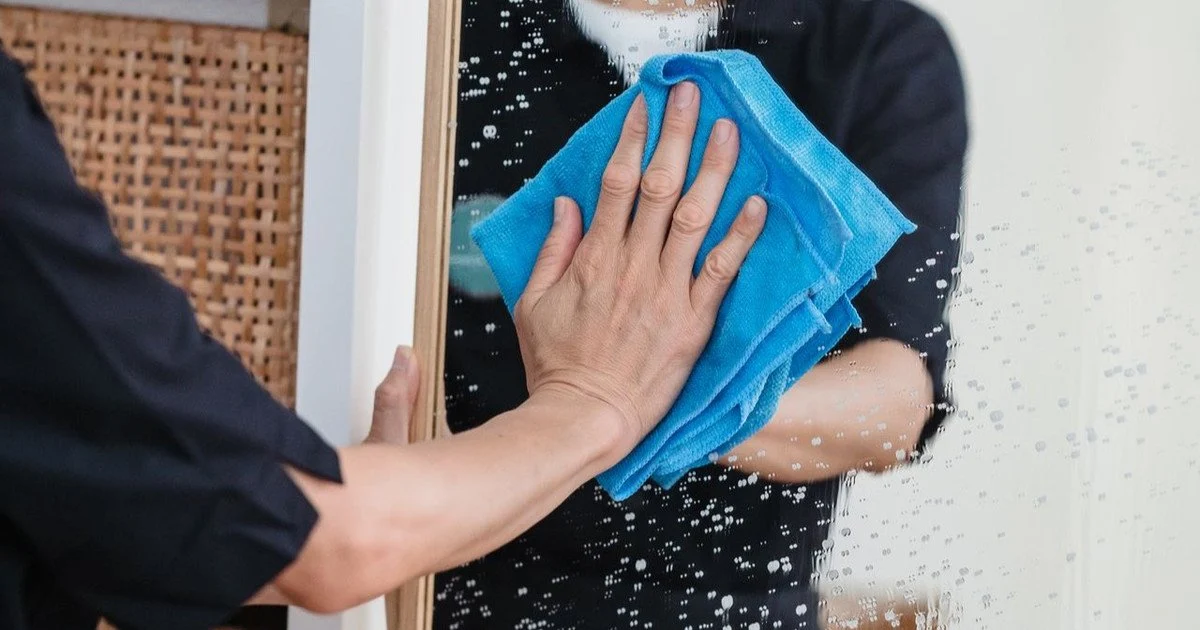
Why you shouldn’t wash a mirror with glass cleaner / © pexels.com
When fingerprints, toothpaste marks, or dust appear on the surface, the hand automatically reaches for glass cleaner. But is it really safe?
It turns out the answer is not so straightforward. Some cleaners can gradually damage the mirror, even if it’s not noticeable at first.
How is a Mirror Different from Regular Glass?
At first glance, it seems a mirror is just a piece of glass. In reality, its construction is much more complex.
The front side has ordinary glass, while the back has a thin reflective layer of metal (most often silver or aluminum), which provides the reflection. It is this layer that is most vulnerable to moisture and aggressive chemicals.
If the cleaning agent gets onto the edges of the mirror or seeps under the protective coating, the metal layer can begin to degrade. Over time, this manifests as dark spots, black dots, or darkening along the edges.
Can You Use Glass Cleaner?
Yes, but only under certain conditions.
Many classic glass cleaners contain ammonia. It dissolves grease excellently and evaporates quickly, leaving no streaks. However, regular use of such cleaners can accelerate the degradation of the mirror’s protective layer, especially if the liquid gets onto the edges of the item.
If you do use a glass cleaner, it’s best to opt for ammonia-free formulas.
How to Properly Wash a Mirror
To keep your mirror shiny for many years, follow a few simple rules:
-
Do not spray the cleaner directly onto the surface – this is one of the most common mistakes. Excess liquid runs down to the bottom edge and gradually penetrates under the protective coating. It is much safer to first apply the cleaner to a microfiber cloth and then wipe the mirror.
-
Use a microfiber cloth – paper towels or regular rags can leave lint and streaks. Microfiber absorbs dirt well, does not scratch the surface, and allows you to achieve perfect cleanliness without much effort.
-
Wipe from top to bottom – move in smooth S-shaped or horizontal strokes. This method helps to avoid streaks and evenly cleans the surface.
What Can Replace Store-Bought Cleaners?
If you want to care for your mirrors as gently as possible, you can use household remedies.
Vinegar and Water
Mix two parts white vinegar with one part water. This solution effectively removes dust, light residue, and greasy stains.
Dish Soap
For stubborn dirt, a few drops of dish soap dissolved in warm water are sufficient. After cleaning, the surface should be wiped dry.
Rubbing Alcohol
It excellently tackles traces of cosmetics, hairspray, toothpaste, or other localized stains.
Mistakes That Shorten a Mirror’s Lifespan
To prevent your mirror from losing its flawless appearance, avoid these actions:
-
spraying cleaner directly onto the mirror;
-
using abrasive powders;
-
harsh sponges or metal brushes;
-
excess moisture on the edges of the item;
-
aggressive cleaners with high ammonia content.
You can wash a mirror with glass cleaner, but only if used correctly. It is best to choose ammonia-free cleaners, apply them not to the mirror surface but to a microfiber cloth, and dry the edges thoroughly after cleaning.
Such simple care will help keep your mirror shiny, streak-free, and without dark spots for many years.
FAQ
What’s the best way to wash a mirror without streaks?
The best option is a microfiber cloth and an ammonia-free cleaner. A homemade solution of water and white vinegar also works well. The cleaner should be applied to the cloth, not directly to the mirror.
Why do streaks remain on the mirror after washing?
Most often, streaks appear due to excess cleaning product, using paper towels, or a dirty rag. To achieve a perfectly clean surface, use a clean microfiber cloth and wipe the mirror in smooth, top-to-bottom motions.
Коментарі Сортувати: Нові Старі Популярні Надіслати