

This method can overload the network, cause wires to overheat, or even start a fire.
Extension cord usage rules
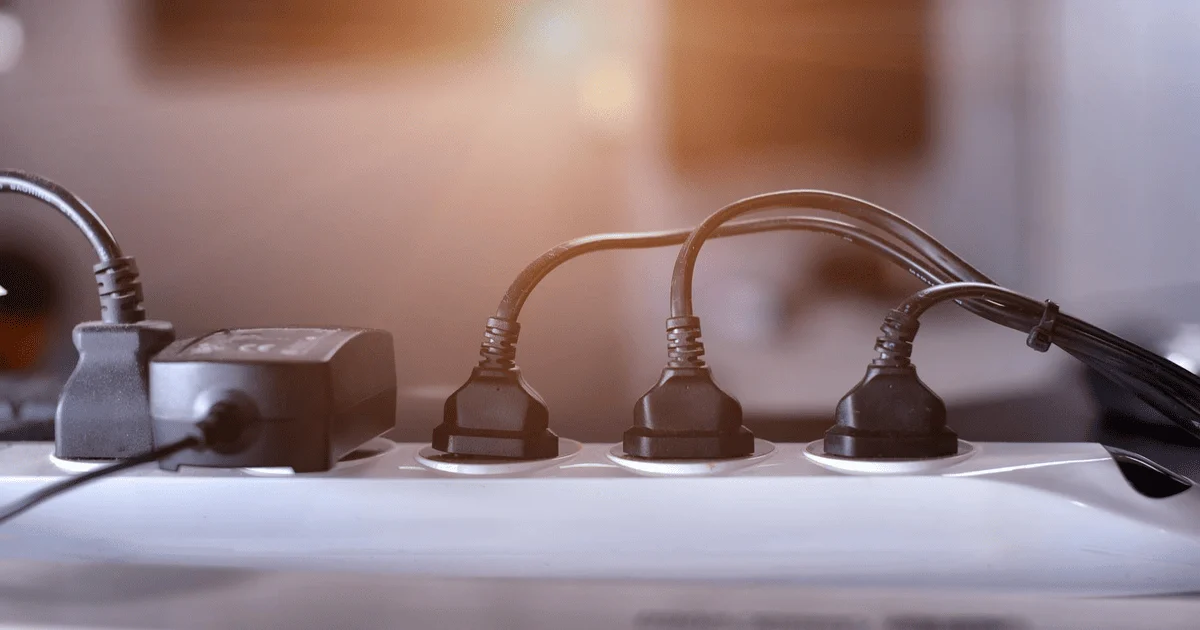
Extension cords have long been a common feature in almost every home. They help connect appliances where there aren’t enough outlets, but not all electrical devices can be used through them. Electricians warn that incorrectly connecting powerful appliances can lead to cable overheating, insulation damage, short circuits, and even fires. It is especially dangerous to connect several powerful devices to one extension cord simultaneously. Even if it is sturdy and modern, its load capacity has limits.
Why an Extension Cord Can Be Dangerous
Every extension cord is designed for a specific maximum power load. If this limit is exceeded, the wires begin to heat up, the contacts weaken, and the plastic can melt.
The most common dangerous situations arise from:
-
simultaneous connection of several powerful appliances;
-
use of cheap or low-quality extension cords;
-
a coiled cable that doesn’t have time to cool down;
-
damaged insulation or loose contacts.
Therefore, it is advisable to plug high-power household appliances directly into a stationary outlet.
Appliances That Should Not Be Plugged Into An Extension Cord
-
Electric heaters are among the most powerful household appliances. Most models consume between 1500 and 2500 watts. Plugging such a heater into a weak extension cord can cause the cable to overheat quickly. This is why manufacturers almost always recommend using a separate wall outlet.
-
Oil-filled radiators and fan heaters. These devices also place a significant load on the electrical network. It is especially dangerous to leave them running through an extension cord unattended or all night.
-
Washing machine. While heating water, a washing machine sharply increases its electricity consumption. Because of this, a standard household extension cord may not withstand the load. Electricians recommend connecting washing machines only to a separate grounded outlet.
-
Dryer. Clothes dryers often consume even more electricity than washing machines. They operate for extended periods at high power, so using an extension cord significantly increases the risk of overheating.
-
Dishwasher. When washing dishes, the appliance heats water to a high temperature, which causes it to consume a lot of electricity. Like a washing machine, it should be powered by a separate stationary outlet.
-
Electric kettle. At first glance, a kettle doesn’t run for long, but its power is often between 1800–3000 watts. If other appliances are operating simultaneously through the same extension cord, the load can become critical.
-
Microwave oven. Modern microwave ovens are also considered energy-intensive appliances. When operating, they can consume over 1200–1500 watts. It is particularly inadvisable to connect them along with a kettle or coffee maker through one extension cord.
-
Electric oven and portable electric stoves. Any heating appliances are among the most dangerous to use via an extension cord. Their power often exceeds the capacity of most household models.
-
Air conditioner. Many air conditioners have a high starting current. At the moment the compressor starts, the load increases sharply, which can lead to cable overheating.
-
Welding machines and powerful electric tools. Construction equipment consumes a significant amount of electricity. Only special power extension cords of appropriate gauge should be used for them, not standard household ones.
Appliances That Can Be Connected
Low-power appliances can usually be connected through a quality extension cord:
-
chargers;
-
table lamps;
-
televisions;
-
laptops;
-
routers;
-
audio equipment.
Even in this case, the total load should not exceed the value specified by the manufacturer.
How to Use an Extension Cord Safely
To avoid dangerous situations, electricians recommend following a few simple rules.
Before use, always check the maximum allowable load, fully unwind the cable, do not cover it with carpets or furniture, do not use damaged extension cords, and do not connect multiple extension cords together.
If the cable becomes hot during operation, there is a smell of melting plastic, or the casing starts to heat up, the device must be immediately unplugged from the mains and no longer used until inspected. These simple rules help prevent electrical wiring from overheating and significantly reduce the risk of fire in the home.
Comments Sort by: New Old Popular Send