

Despite Washington’s threats, Iran’s banks, air travel, and trade with several countries continue to operate, with China remaining the main challenge for the American sanctions campaign.
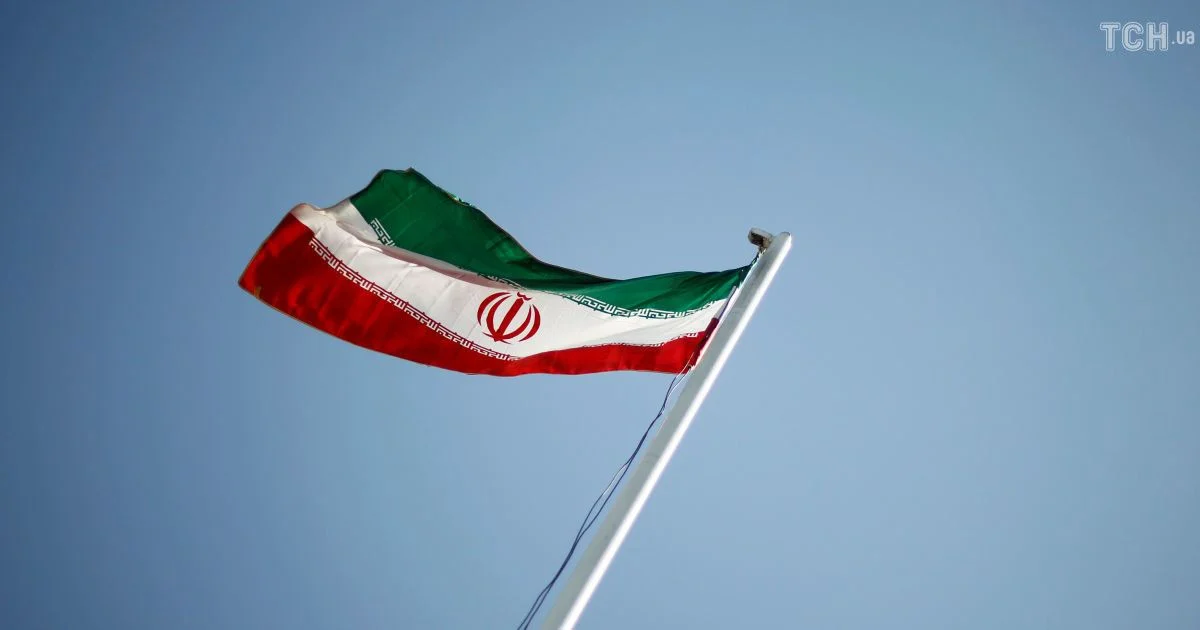
Iran’s flag / © Reuters
The US attempt to increase economic pressure on Iran has encountered resistance from its key trading partners.
This is reported by Bloomberg.
Countries maintaining trade relations with Iran are in no hurry to comply with US threats of new stringent sanctions. According to the publication, the American effort to intensify economic pressure on Tehran is currently not yielding the expected results due to China’s position and the reluctance of Iran’s other partners to curtail trade.
As the publication notes, US Treasury Secretary Scott Bessent announced the commencement of extensive economic pressure on Tehran, aimed at ending the war. The American official compared this plan to the Allied landings in Normandy in 1944.
However, in practice, key regional states have not shown readiness to alter their relations with Iran.
Specifically, branches of Iranian banks in the United Arab Emirates, including Bank Melli, continue to operate as usual.
Commercial flights between Iran, Turkey, the UAE, Azerbaijan, Russia, and China are also proceeding without changes.
Pakistan, in turn, has stated that it is not obligated to comply with unilateral American restrictions, and therefore continues its land trade with Iran.
At the end of the week, the US also announced its intention to impose restrictions on branches of Egypt’s Banque Misr in the UAE. However, analysts consider this move insufficiently potent to significantly impact Iran.
“With the war exceeding the six-month mark, the public actions taken by the Treasury this week do not match the hype,” said former US Treasury official Alex Zerden.
China as the main obstacle
The most complex issue for the US administration remains Beijing’s stance.
For the sanctions pressure to truly inflict serious damage on Iran, Washington would have to involve China, the primary buyer of Iranian oil. Currently, according to Bloomberg, China accounts for approximately 90% of Iran’s oil exports.
However, Beijing has already made it clear that it has no intention of curtailing trade with Tehran, despite pressure from the US.
An attempt to extend sanctions to Chinese financial institutions, in turn, could provoke a large-scale response from Beijing and create risks for the global financial system.
“You cannot wage a substantive economic war against Iran while ignoring the only country that absorbs 90% of its oil exports,” emphasized Leland Miller, CEO of the data platform China Beige Book.
Experts also doubt that Washington will be able to force Iran to capitulate solely through unilateral restrictions.
“The idea that Iran can be knocked out this way is absurd – it won’t move the needle. There are too many participants, and it rewards the people involved too much,” noted Steven Fallon, chief advisor at DBM Consulting.
It was previously reported that US Secretary of State Marco Rubio had informed Washington’s allies in recent days that “for now,” the United States does not plan to launch new strikes on Iran.
We previously reported that about 40 tankers had passed through the Strait of Hormuz, transporting approximately 16 million barrels of oil, according to Axios journalist Barak Ravid, citing US officials.
Related topics
Iran USA Donald Trump Comments Sort: New Old Popular Send