

The image of a witch has haunted women who lived by their own rules for centuries.
A witch in Ukrainian culture is much more than a character from folk tales or scary stories. Often, women who lived independently of men, possessed knowledge, healed, or simply did not fit societal expectations were called by this name. This is precisely why the image of a witch combined fear and admiration, condemnation and respect.
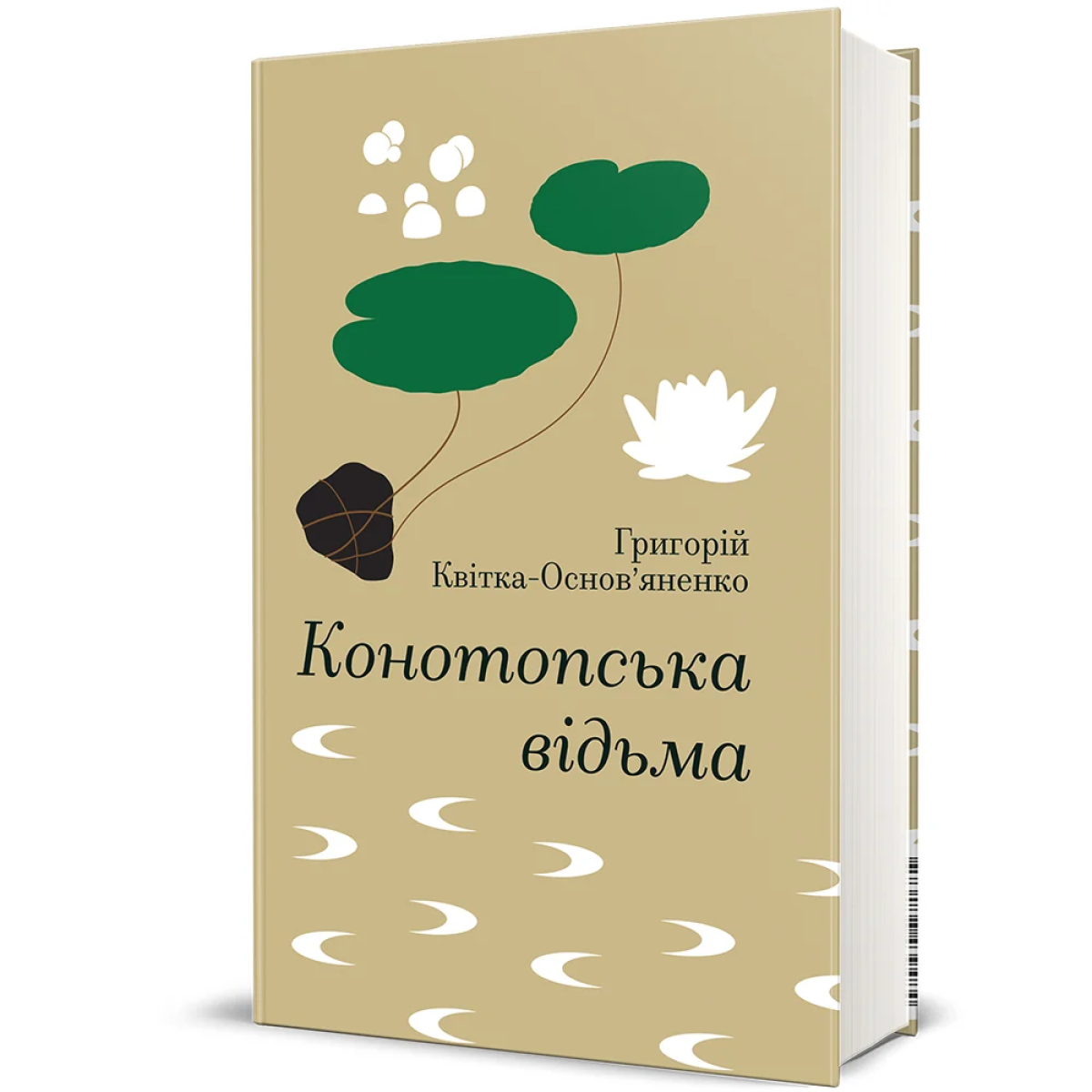
In Hryhorii Kvitka-Osnovianenko’s novella “The Konotop Witch,” these contradictions are particularly evident. Behind the humorous story of drought, superstitions, and unsuccessful matchmaking, one can see a remarkably eloquent set of female portraits.
Freedom, Knowledge, and Mysticism
Suspicion of witchcraft rarely fell on random women. Most often, this stigma was applied to those who lived outside the model common in patriarchal society: “daughter – wife – mother.” These could be widows, solitary and elderly women, healers, midwives, or those independent of men. The knowledge and skills possessed by such women also allow us to see a pattern in the “witch hunts”: the ability to heal, assist in childbirth, or tell fortunes, as skills far from masculinity, easily turned in the eyes of the community into grounds for suspicion.
In the novella, such autonomy is embodied by the old Yevdokha Zubykha – no one can subdue her, or even drown her, and she waves away the offered money, saying she doesn’t need it, “I have everything, and I can get whatever I desire.” Paradoxically, perhaps the only truly free person in all of Konotop is precisely the one declared an outcast by the community.
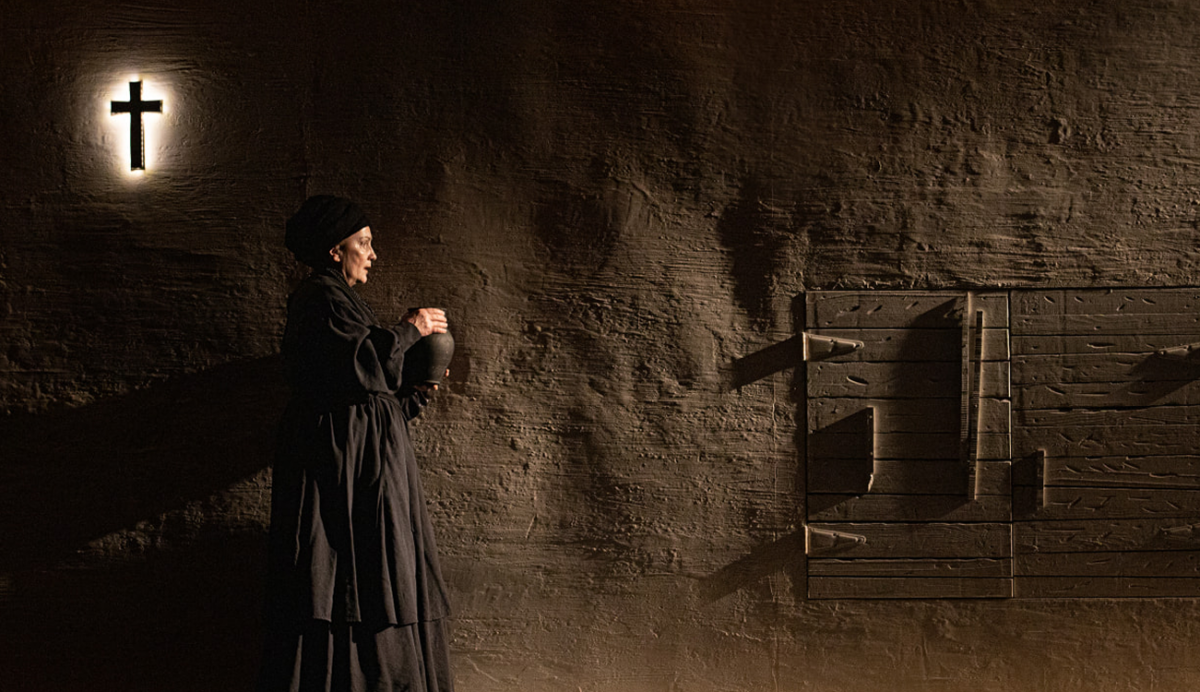
“The Konotop Witch” at the Ivan Franko National Academic Drama Theater
Folk Motifs and Attitudes Towards Female Power
Folk culture cultivated a dual attitude towards female power – fear coexisting with recognition. The residents of Konotop believe the fortune-teller Khimka more than actual evidence:
“Even if someone is brought to the town hall, caught with cucumbers or in a pantry with lard, and Khimka says it wasn’t him who stole it, they would immediately let him go and start looking for the one Khimka names, even if he wasn’t even in the village then.”
At the same time, the same community that uses her “gift” is ready to throw another such woman into the pond: the ritual in the book involves binding and drowning to determine the guilty parties. Power, knowledge, and independence are perceived not as virtues but as proof of guilt in weather anomalies.
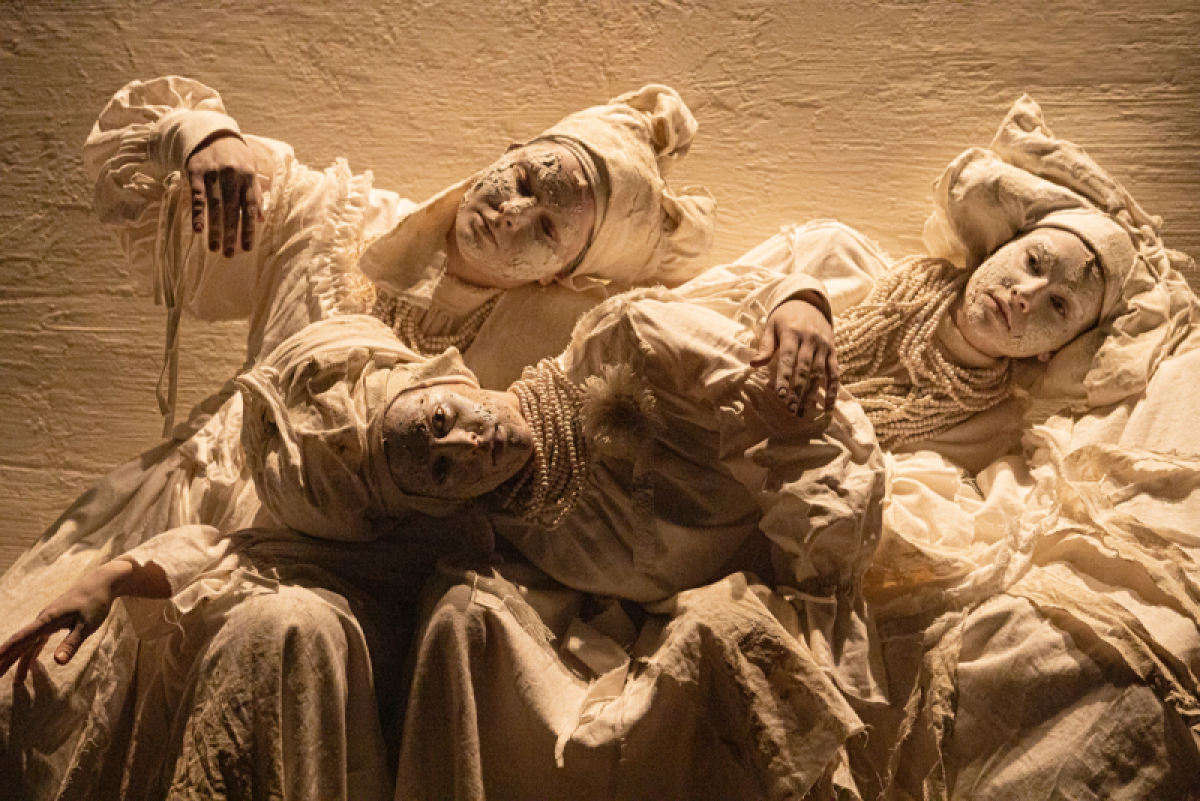
“The Konotop Witch” at the Ivan Franko National Academic Drama Theater
The fate of Olena is also telling – a smart hostess who manages everything both in the field and at home, because without her, “no one knows how to do anything.” But for Zabriakha, she is primarily interesting as a profitable match: he evaluates the bride more for her livestock and dowry than for her character.
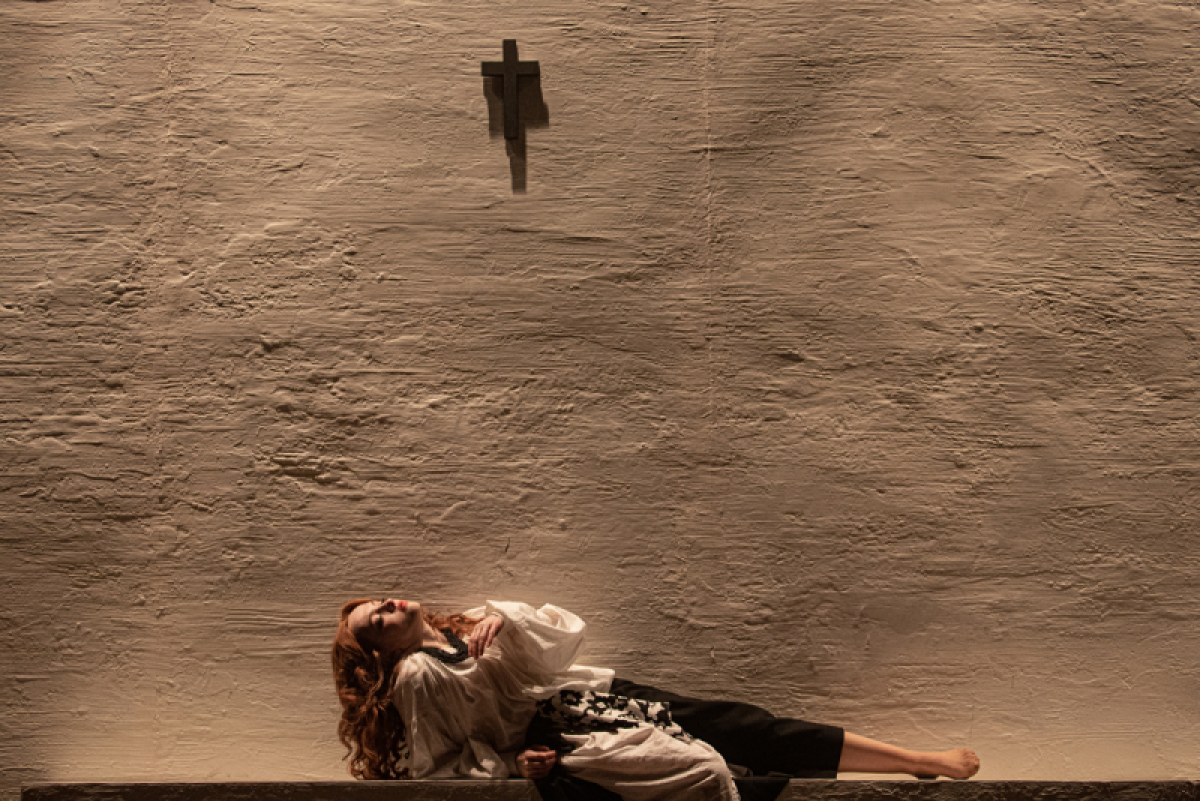
“The Konotop Witch” at the Ivan Franko National Academic Drama Theater
Contemporary Witchcraft
A modern reader is unlikely to be frightened by the Konotop witch – rather, she will recognize in her a familiar figure: a woman whom the community tries its best to break, but cannot. In the scene of the “water trial,” Yevdokha does not drown but floats to the surface and openly mocks the crowd:
“…like a little fish on the water, she lies, wriggling her bound hands and feet, arching her belly and back and murmuring: ‘Little cups, little cups, little cups!’ … They pull her, throw her into the water with all their might – and she doesn’t sink, she just doesn’t sink, and even jeers at everyone.”
The mechanism of “accusing of witchcraft” has changed its form but retained its essence: instead of magic, a modern woman can be condemned for “excessive ambition” or “difficulty.” Despite the recognizability of the novella’s themes, Kvitka-Osnovianenko does not write a feminist manifesto – he remains a man of his time and rather laughs at the ineptitude of men than consciously defends women. But this is precisely why the book is valuable: it provides historical material that can be re-read in a new light, and reminds us that the image of women in Ukrainian culture has changed slowly – from an object of fear to a fully-fledged heroine.
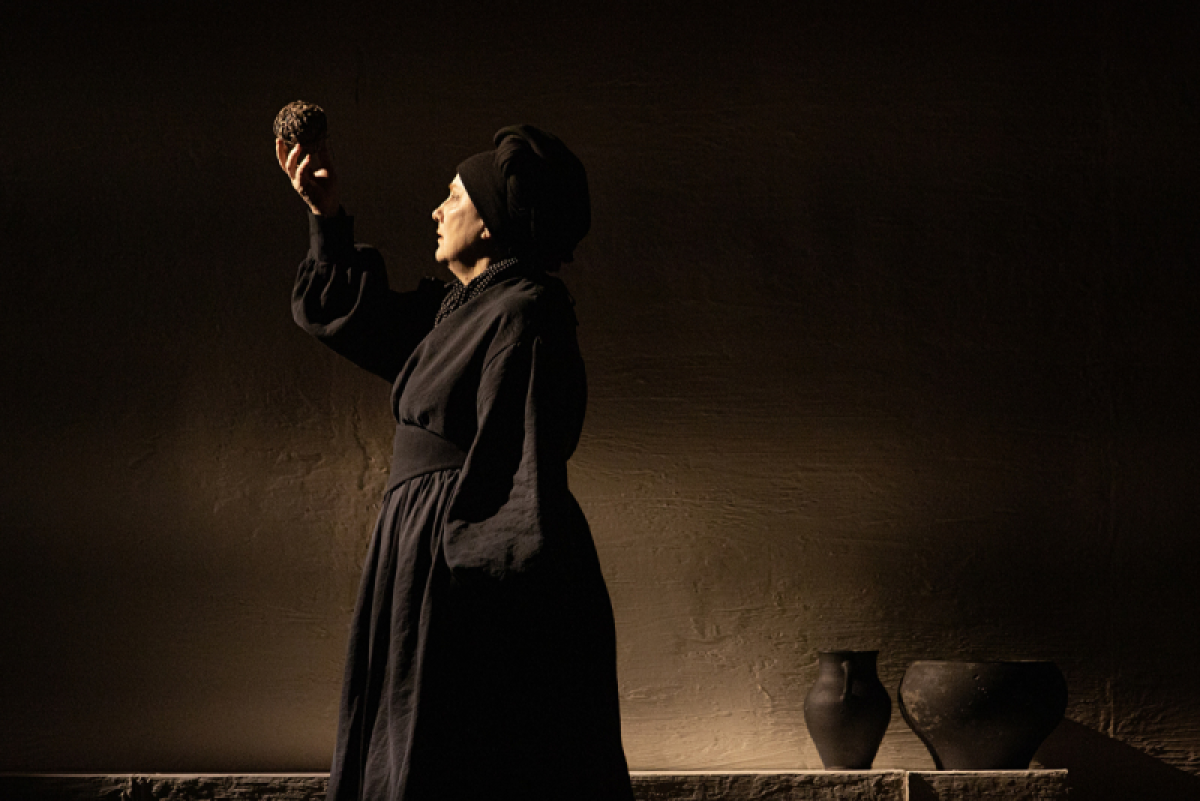
“The Konotop Witch” at the Ivan Franko National Academic Drama Theater
“The Konotop Witch” is not just a witty classic about superstitions and human folly. It is also an opportunity to see how attitudes towards women who stepped beyond their usual roles were formed in Ukrainian culture. The witch, whom the community calls a threat, turns out to be perhaps the freest person around.
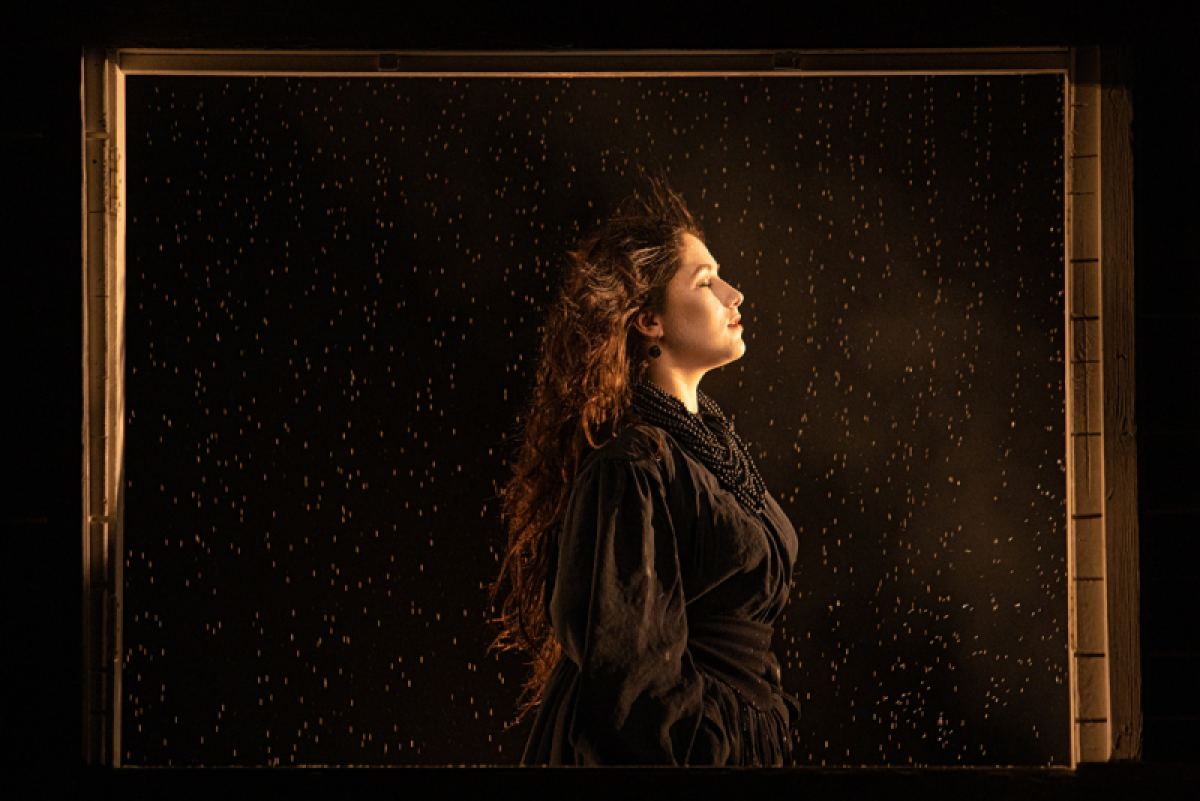
“The Konotop Witch” at the Ivan Franko National Academic Drama Theater
Дізнатися більше на: elle.ua