

The creator of the Ukrainian avant-garde, who later became part of the Soviet cultural system
Anatol Petrytskyi was a Ukrainian artist and stage designer, one of the most prominent figures in the artistic milieu of the 1920s–1930s. He worked on the design of performances for the Young Theatre and the Berezil Theatre, collaborated with Les Kurbas, and created hundreds of stage and painting works.
Like many artists of the era, Petrytskyi changed under the influence of Soviet pressure, which makes him a complex figure. On one hand, there was Anatol, who admired Impressionism, created avant-garde and futurist works, and lived in the “Slovo” House in Kharkiv. On the other hand, there was Anatoliy Halaktionovych, a Soviet man in a suit who received the Stalin Prize and created works to the taste of the authorities of that time.
Author Valentyna Klymenko has written the book “Histories of Ukrainian Artists,” which allows us to see Anatol Petrytskyi through the eyes of a 21st-century person. Read an excerpt from it below, and you can pre-order the full edition on the Projector Publishing website.
They couldn’t help but become friends: educated, refined, artistic, charismatic, with the looks of a romantic hero, Kurbas was the living embodiment of the Actor image that the young orphanage pupil Tolik Petrytskyi envisioned.
“I knew Kurbas from the first days he appeared in our Ukraine. I was friends with him, argued with him, loved him, sometimes hated him, and he loved me, hated me, and so on. More than once, we—not exactly once, but often—walked together all night,” Petrytskyi would later say at a memorial evening for Les Kurbas in 1962, organized by Les Taniuk.
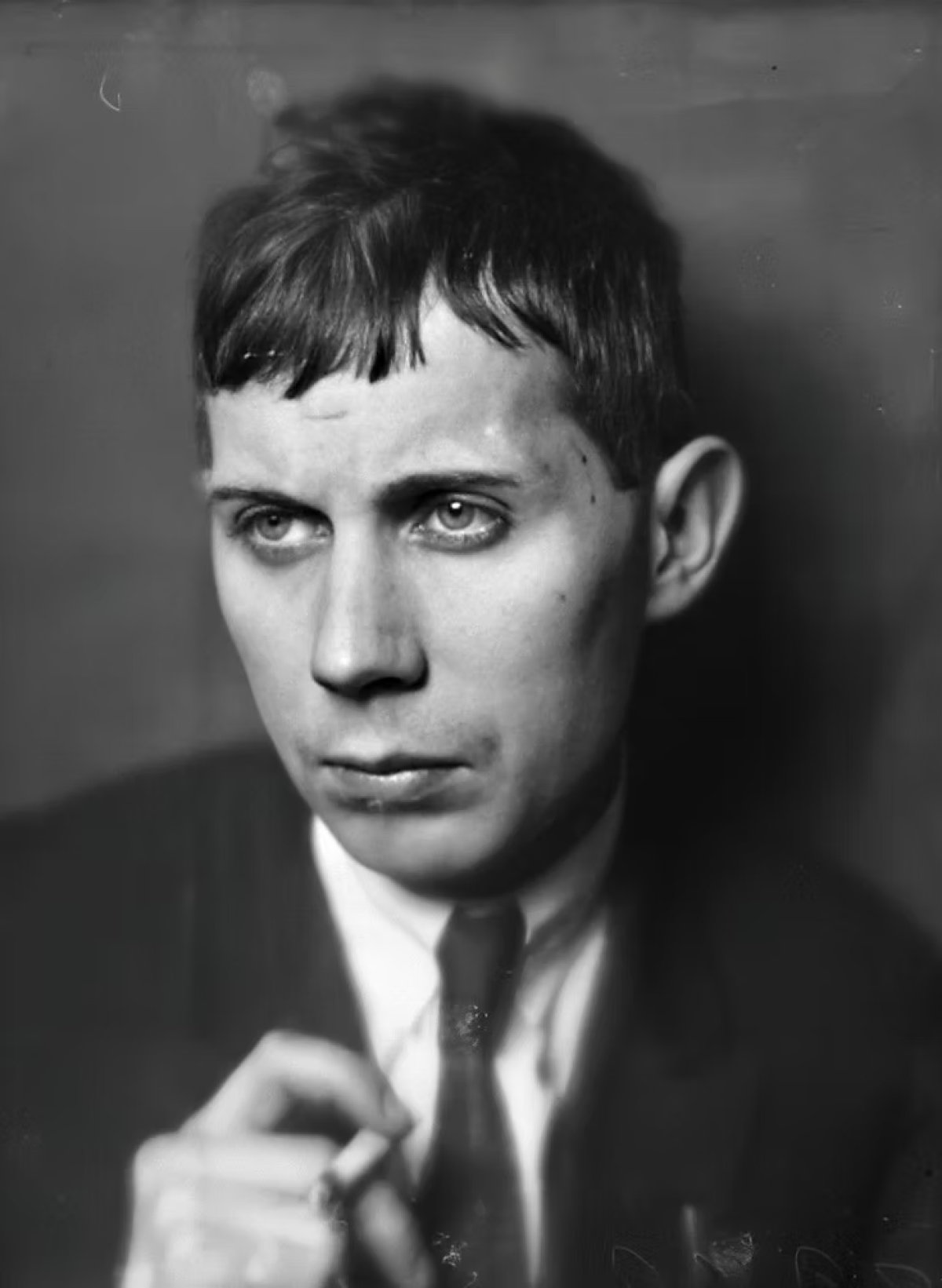
Anatol Petrytskyi
Moreover, they all lived nearby: Petrytskyi in a wing on Pankyivska Street, Kurbas and the actor couple Sofia Manuilovych and Stepan Bondarchuk on the perpendicular Maryinsko-Blagovishenska Street (now Saksahanskoho), actors Polina Samiyenko and Yona Shevchenko on Fundukliyivska Street (now Bohdana Khmelnytskoho).
In 1917, Kurbas’s “Studio” transformed into the partnership “Molodyi Teatr” (Young Theatre)—a horizontal structure where the founding actors were the main managers and administrators, and all decisions on creative matters were made collectively. How were scenography issues resolved?
The 23-year-old Petrytskyi became the chief artist of the “Molodyi Teatr” in 1917. He held this position for only two years, but as Les Kurbas said,
“an artist appeared in the Ukrainian theatre when Anatol Petrytskyi joined the ‘Molodyi Teatr’.”
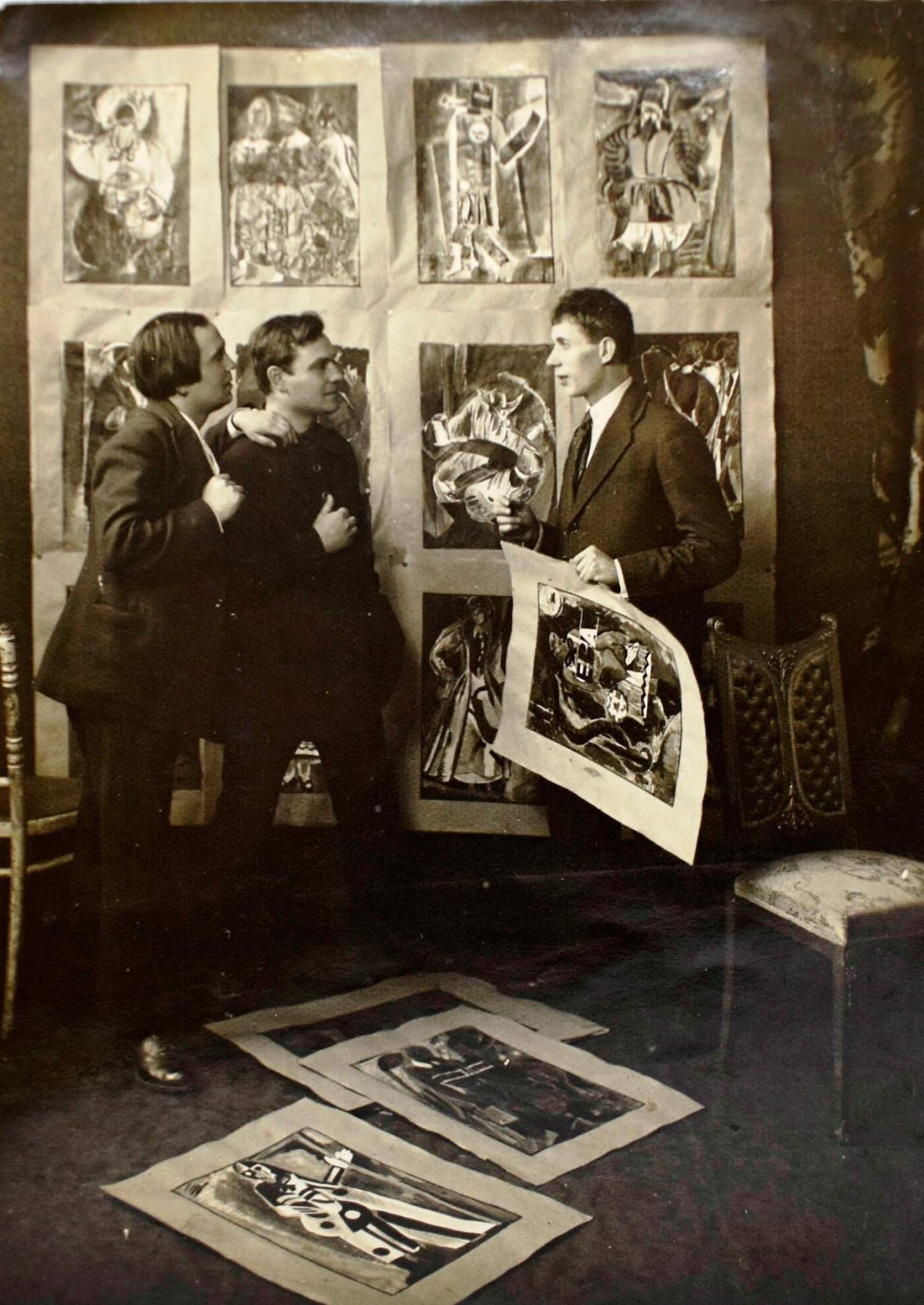
Anatol Petrytskyi, Hnat Yura, and Oleksandr Yura-Yurskyi examine sketches for the play «Viy» based on Ostap Vyshnya’s work. Kharkiv, 1924, National Museum of the History of Ukraine
The artist’s debut at the “Molodyi Teatr” was the play “Theatre of O. Oles,” which consisted of three etudes: “Autumn,” “Dance of Life,” and “By the Light of the Bonfire.” It was an attempt at symbolic theatre, moreover, in collaboration with a living Ukrainian classic. Before Kurbas, Oles’s dramatic etudes had already been staged at the Sadovsky Theatre and the Ukrainian National Theatre, but both productions showed that traditional theatre could not cope with modern drama that followed European trends—critics noted the influence of the spirit of Maeterlinck on Oles’s etudes.
Petrytskyi managed to unite three independent etudes, create symbolic images, and do so without spending a lot of money by covering the stage with dark cloth. In the depths, on one side, he placed a snow-covered window with a branch that ominously tapped at the window during the most dramatic moments, and on the other side, a chimney. A green moonbeam entering the window and a red beam from the fire in the chimney created a lighting score on stage, under which the characters predominantly appeared as silhouettes.
For the etude “Dance of Life,” Petrytskyi created a mural depicting writhing, intertwined red-crimson lines that evoked anxiety and ominous premonitions in the audience—the artist’s knowledge of decorative techniques and acquaintance with the latest abstract art were evident. Directing and scenography in this play worked in unison—the Ukrainian directorial theatre emerged with a new aesthetic concept.
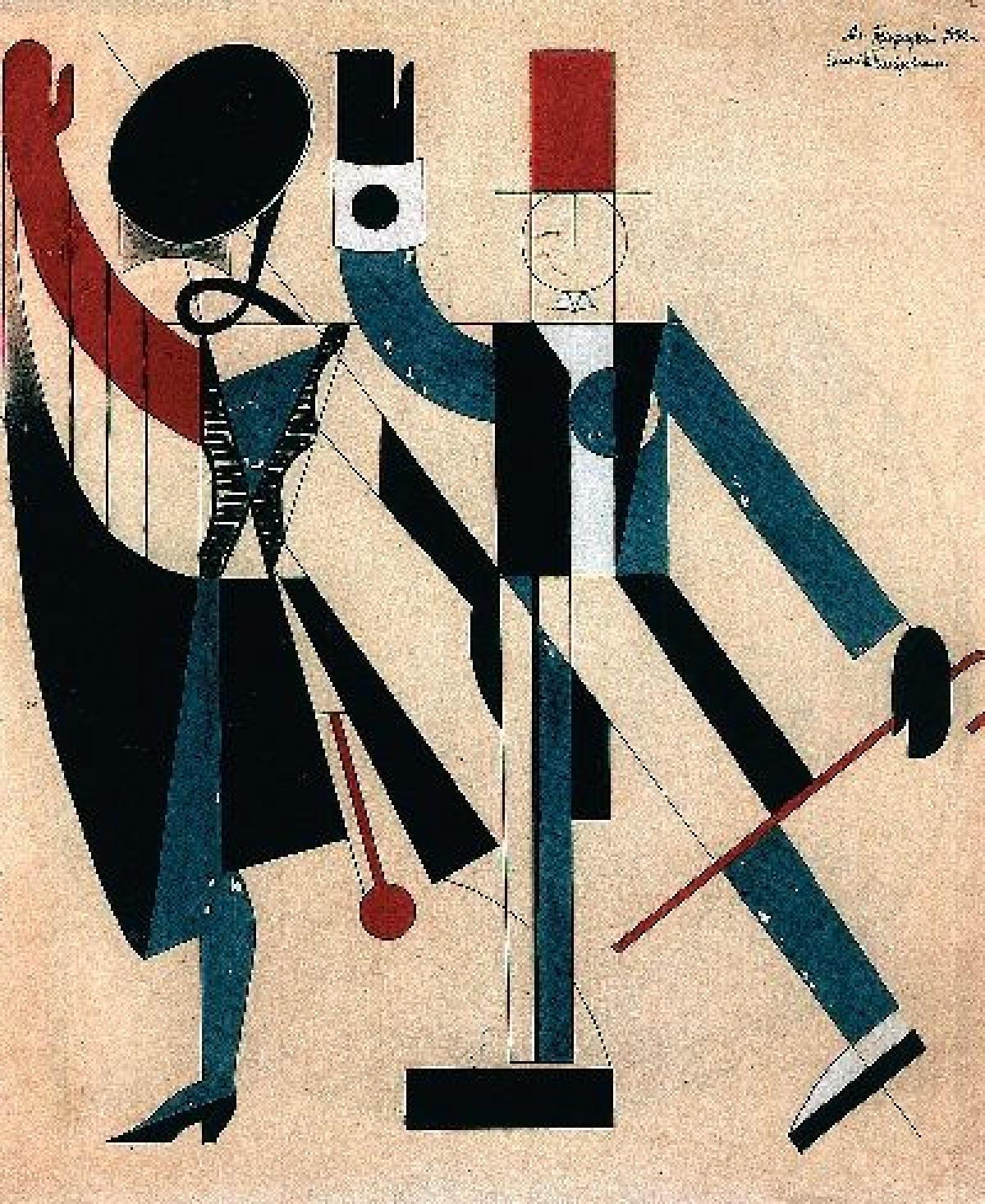
Petrytskyi operated on the principle of “Give me a bucket and a broom, and I will design a play” during those poor times. In November 1918, the “Molodyi Teatr” opened its second season in Kyiv with a production of Sophocles’ ancient Greek tragedy “Oedipus Rex.” When the curtain opened, the audience saw six ancient columns on the podium-stage in the background and two more on the sides. Between the middle columns, a red-crimson curtain with a golden meander was stretched, moving rhythmically to the choir’s singing, and in the center, an altar. The concise decoration resembled a frame within which scenes changed, and the symbolic ancient Greek style referred to the classical tragedy in Thebes.
If the audience could rewind the scene a few weeks, they would see the theatre actors, between rehearsals, collective recitations, breathing exercises, and lectures about Ancient Greece, sitting in the theatre and collectively patching old sacks and sewing canvases for the decorations from them. The nervous and temperamental Petrytskyi, with an ever-present cigarette on his lip, painted the acquired burlap with aniline dyes, shaping it into velvet, satin, or the finest linen. And one could even sense the scent of these freshly painted “robes” filling the entire stage and auditorium. Another material for the decorations was sheets of plywood. The decorations for “Oedipus Rex” turned out to be simple, elegant, and voluminous-relief, enhanced by lighting, and were well-utilized by the actors.
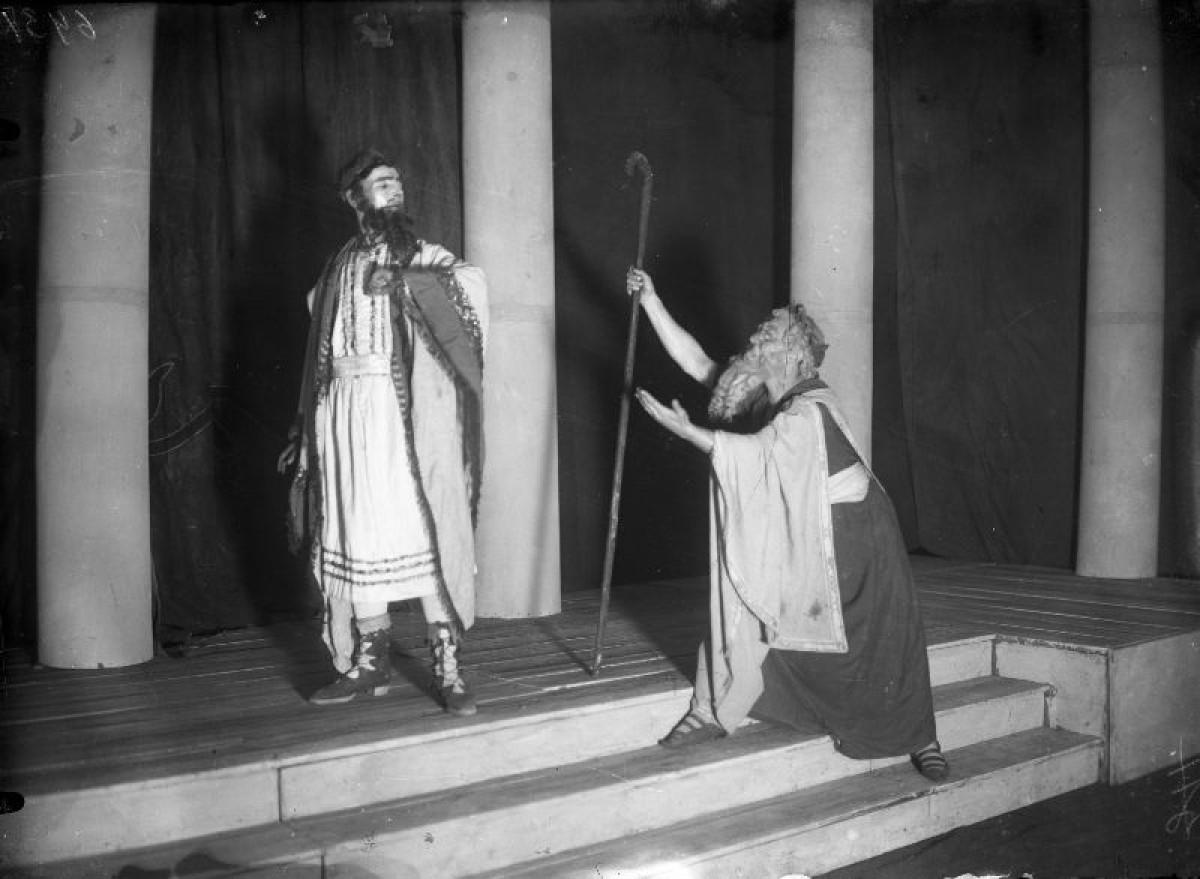
«Oedipus Rex»
In 1919, Kurbas and the “Molodyi Teatr” opened a literary and artistic club on Mykolaivska Street (now Horodetskoho Street)—”Mystetskyi Lokh” (Art Cellar), where young innovators—poets, musicians, actors—gathered every Monday and Saturday. Mykola Zerov and Vasyl Ellan, Vasyl Chumak and Vasyl Semenko performed there; an evening dedicated to Pavlo Tychyna was organized, and artistic discussions were held.
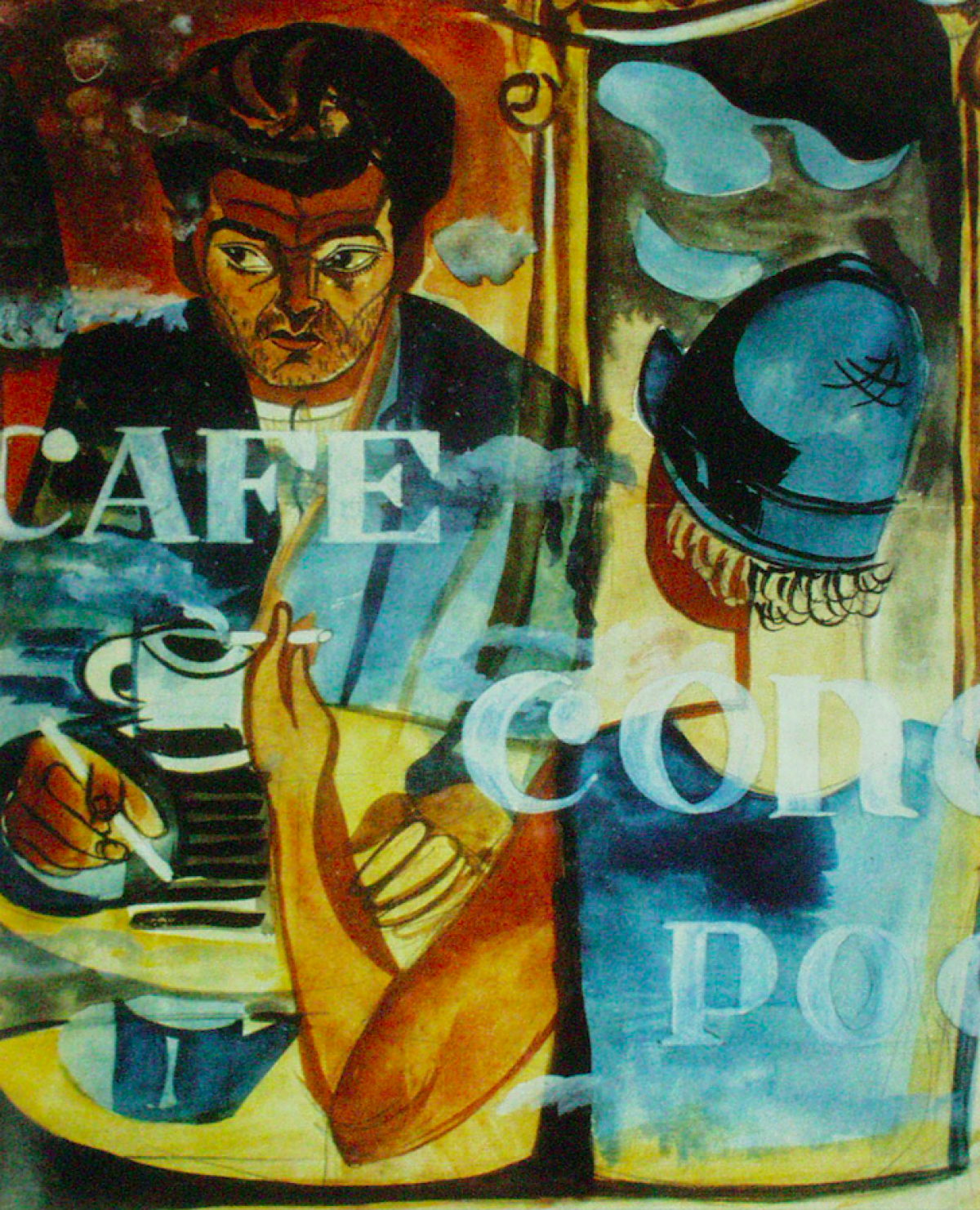
Portrait of Mykhail Semenko, created by Petrytskyi, NAMU
“Mystetskyi Lokh” was not conceived as an alternative to the bohemian cafe “Kh.L.A.M.” operating nearby on Mykolaivska Street, but it so happened that Russian cultural figures, who flocked to the calmer and less hungry Kyiv en masse after the Bolshevik revolution, performed mainly at “Kh.L.A.M.,” while Ukrainian rebels performed at “Mystetskyi Lokh.” “Lokh” was painted—of course!—by Anatoliy Petrytskyi, who increasingly began to be referred to as Anatol. Anatol sounded European, modern, echoing the name Mykhail (as the main futurist of the 1910s-1920s Mykhail Semenko signed his works and articles) and the names of the first quaterfuturists—Bazyil Semenko and Pavlo Kovzhun.
За матеріалами: elle.ua