

Rainbow cloak, solarpunk, and the new aesthetic of future fashion
When we talk about future fashion, our imagination typically conjures the familiar imagery of classic cyberpunk: dark leather, bulky hardware, heavy dark nylon, and an overall mood of noir dystopia. However, the industry appears to be tired of this aesthetic. Today, the fashion avant-garde is increasingly turning to optimistic futurism, where high technology coexists with nature, and cold monochrome gives way to light, color, and organic forms. One of the main inspirations for this new vision this summer promises to be cinema.
Starting August 13th, “Arko. The Great Steppe” will be released in Ukrainian cinemas – one of the most anticipated animated releases of the year, produced by Natalie Portman. Director Hugo de Faucompret’s film has already garnered an impressive collection of awards. Following its premiere in Cannes, it won the main prize – the “Crystal” – at the Annecy festival, received recognition in Locarno and Toronto, was named best animated film of the year by the European Film Academy, and earned nominations for an Oscar, Golden Globe, and BAFTA. But beyond its poignant story, “Arko. The Great Steppe” also offers a new visual language that already resonates with the most current fashion trends.
Retrofuturism Instead of Soulless 3D
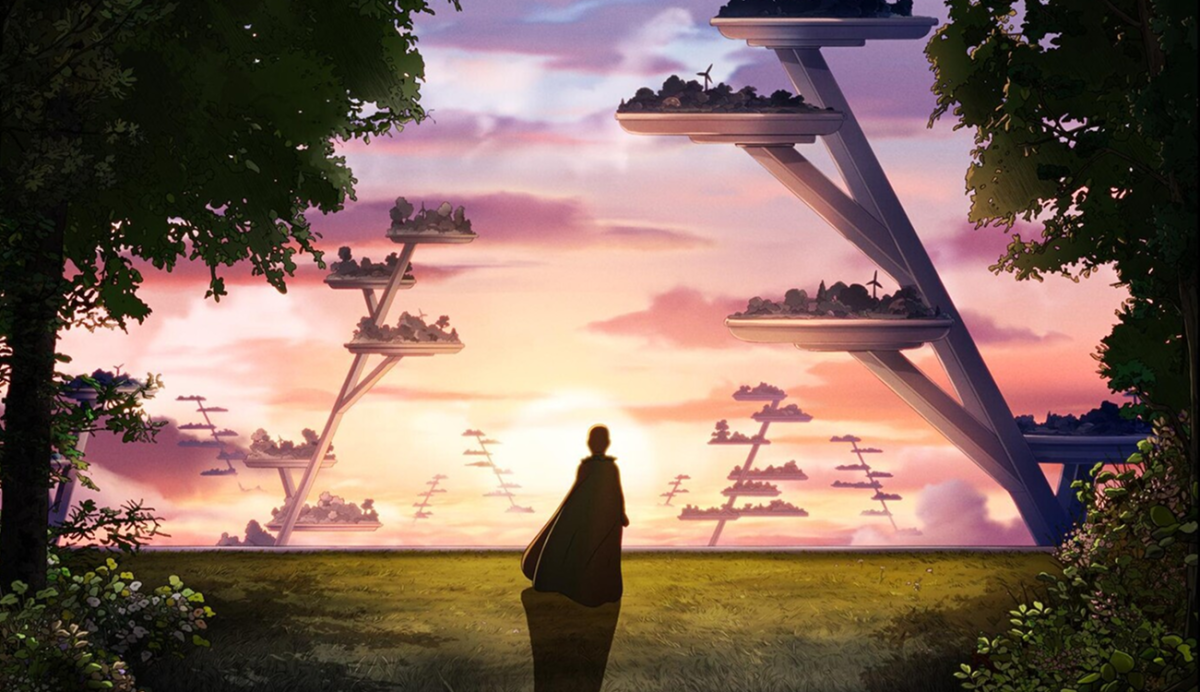
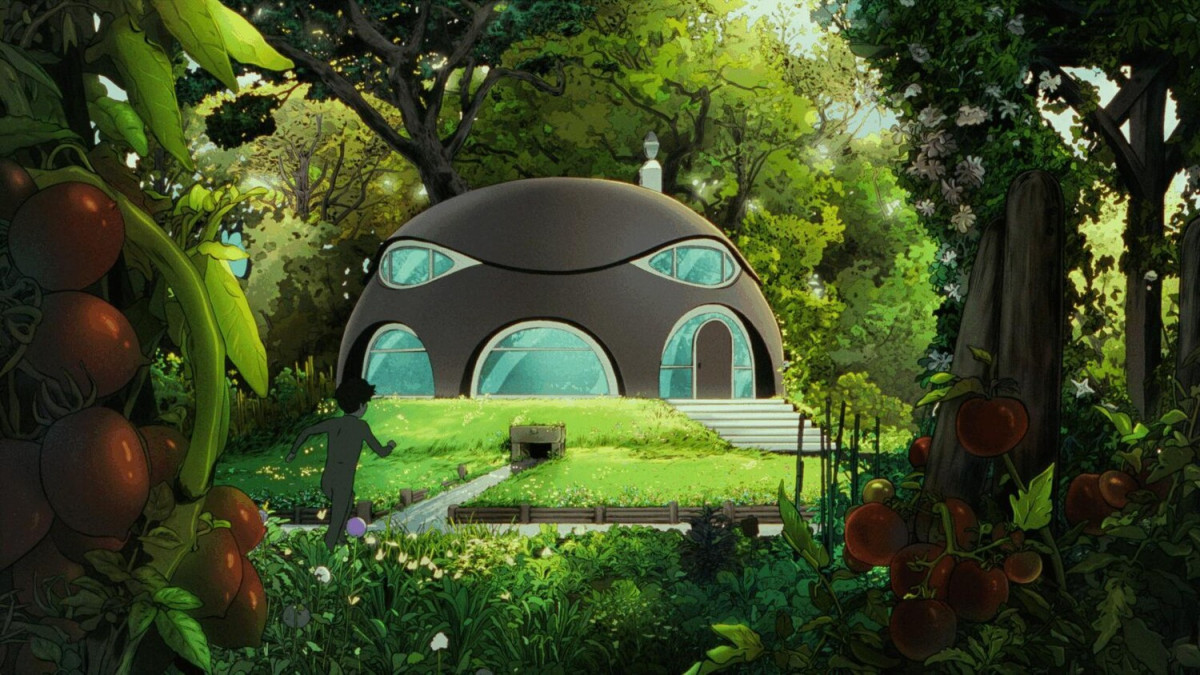
The events of “Arko. The Great Steppe” unfold in 2075 on a Earth scorched by fires, where children are raised by robot nannies. Instead of the usual flat 3D gloss, the creators consciously chose lively 2D hand-drawn animation. Its refined graphics evoke the surreal worlds of Jean Giraud (Moebius) and the rich palette of Hayao Miyazaki. In every frame, one feels tactility, complex color schemes, and craftsmanship – precisely the qualities that fashion designers seek today at Fashion Weeks, striving to break free from the constraints of digital perfection.
Hugo de Faucompret himself shares that the film’s color palette was shaped by his childhood experiences in Chad and Mexico, where vibrant natural hues blended with bright vintage advertisements. It is this contrast that gives the film a sense of a warm, living future, rather than a sterile world of computer algorithms.
Solarpunk and a Rainbow Manifesto
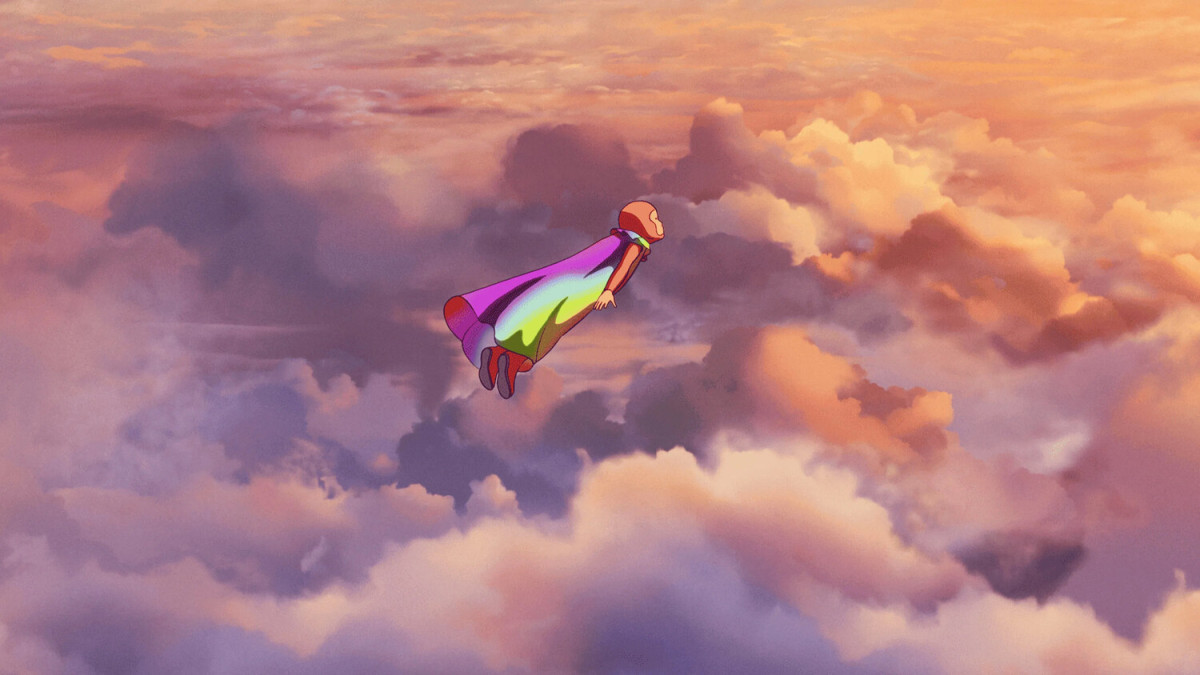
The central visual symbol of the film is the protagonist’s bright rainbow cloak. When Arko falls from the sky onto the dry, almost colorless planet, this cloak becomes not just a costume element, but a true manifesto of life, hope, and diversity.
This is a vivid embodiment of solarpunk – a direction in futurism that rejects total control and survival aesthetics in favor of ecological harmony, light, and coziness. While classic techwear leans towards militarism, solarpunk perceives clothing as a living organism that interacts with its environment and solar energy.
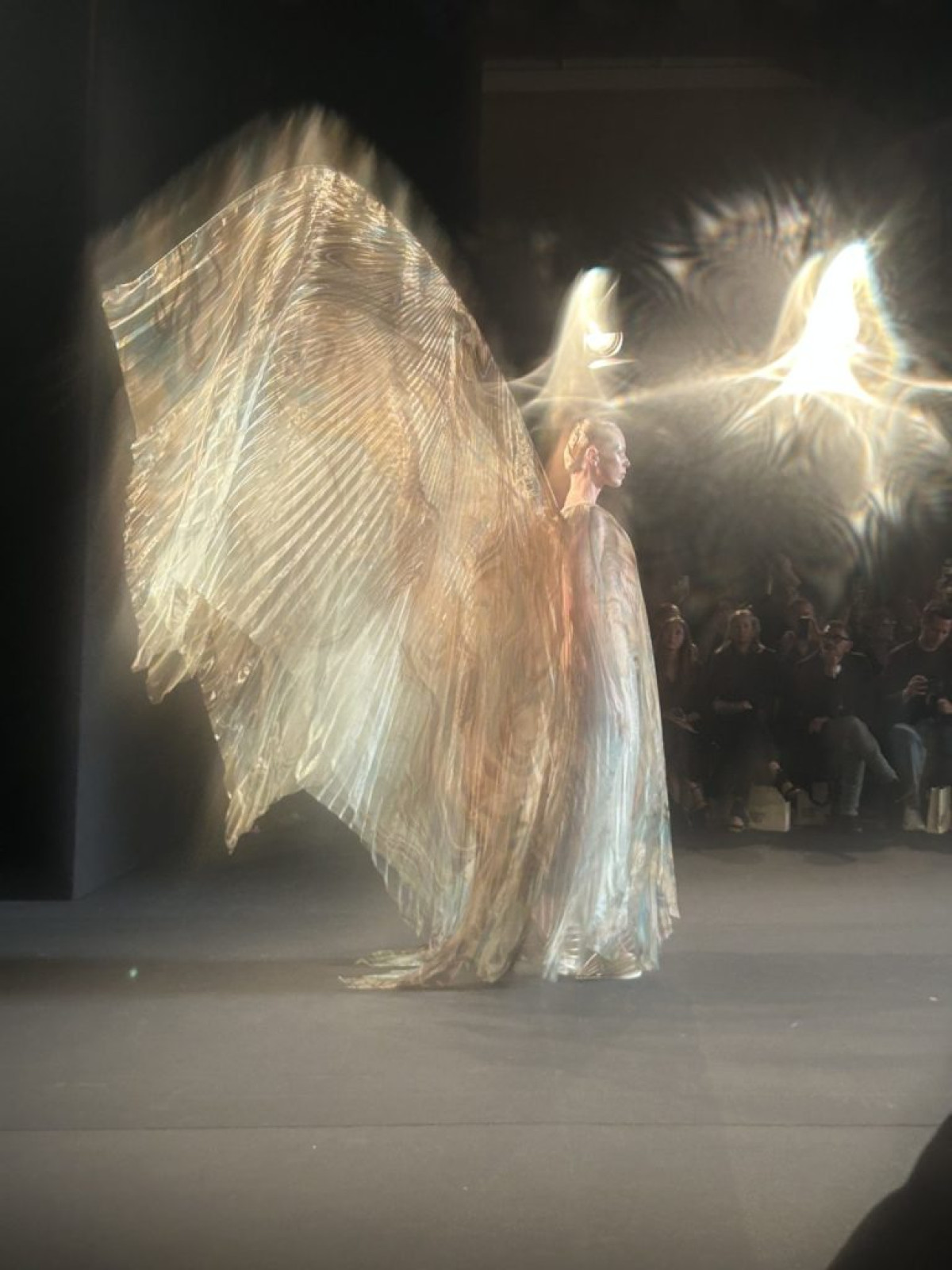
This trend is already well noticeable on the runways. Iris van Herpen creates couture dresses-sculptures that mimic light refraction and air movement, while Stone Island experiments with thermochromic and reflective fabrics that change color under sunlight. At the same time, solarpunk is much more than an ecological trend. It is an entire philosophy where renewable energy, biodesign, and natural forms become the foundation of everyday wardrobes.
Craftsmanship Over Mass Production
Fashion, exhausted by mass market and endless micro-trends, is also increasingly returning to craftsmanship. Brands are focusing on deconstruction, upcycling, and visible handiwork. Slight imperfections, texture, and handmade qualities are valued more today than flawless factory symmetry.
This philosophy is evident, for instance, in the conceptual brand Demobaza and its collection The Council of Light. Deconstructed cuts, natural materials, and soft pastel shades create the image of future “guardians of light.” Instead of aggressive leather harnesses, there is textured knitwear and flowing silhouettes reminiscent of Moebius’s illustrations.
“Arko. The Great Steppe” subtly reminds us: the future doesn’t have to be bleak or sterile. Even in times of crisis, there is still room for magic, color, and human warmth. And while global brands experiment with transparent vinyl, innovative materials, and eco-friendly fabrics, Hugo de Faucompret’s animation offers an even simpler answer to the question of what future fashion can be: sometimes, it’s enough to simply look at the world through the eyes of a child in a rainbow cloak.
Дізнатися більше на: elle.ua